
Overcoming Constraints: A Comprehensive Guide to Urban Solar PV Systems & Advanced Mounting Solution
Ever thought your city roof could power your whole home, even with tall buildings casting shadows? Modern cities pose big challenges for those wanting to use green energy. But, thanks to renewable energy solutions, it’s now easier for city dwellers to go green.
It might seem tough to follow local rules or find space for panels. Yet, with smart designs, urban solar pv installation is more doable than you might think. This guide will help you overcome these obstacles and make your property energy-efficient.
Checking your roof and choosing the right tools is crucial for success. You can get past old barriers and embrace a cleaner future in the city’s heart. Knowing your property’s potential is the first step to energy freedom.
Table of Contents
Understanding Urban Solar Challenges and Opportunities
When thinking about using solar energy in cities, it’s key to know the special challenges and chances. Cities have lots of buildings, little open space, and complex structures. These make it hard to use solar energy.
But, cities need green energy because they use a lot of energy and pollute. The goal is to find ways to use solar energy in these places.
Common Space and Structural Constraints in City Environments
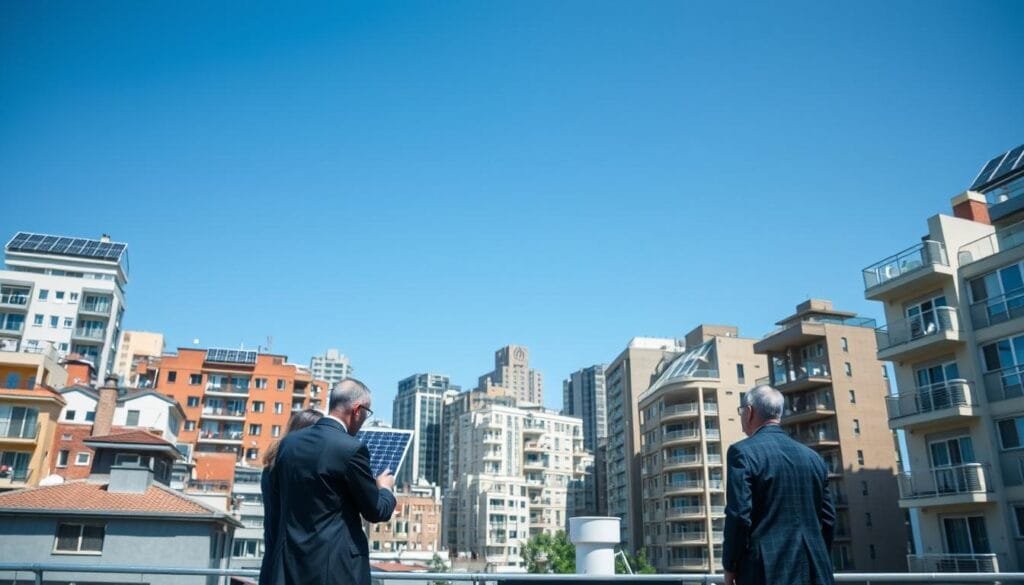
City spaces are often tight, with buildings and roads taking up most of the room. This can cause problems like shadows from buildings or trees, which can lower solar panel efficiency.
Also, buildings’ strength is important when adding solar panels. Older buildings might need extra support to hold the panels.
Why Urban Renewable Energy Solutions Matter
Urban areas produce a lot of pollution, making green energy very important. Switching to solar energy can cut down pollution and make cities cleaner and healthier.
Urban solar energy also helps the grid during busy times. It makes energy more secure and lessens the load on old energy systems.
The Viability of Space-Constrained Solar Solutions
Even with the hurdles, there are good ways to use solar energy in tight spaces. New mounting systems and energy-efficient technology can make the most of solar power in tough urban spots.
Knowing the specific challenges and chances in your city helps find the best solar solutions. This ensures a smooth move to green energy.
Assessing Your Property for Solar Potential
To find out if your property can use solar power, you need to assess it carefully. This means looking at several important steps. These steps help you see if your property is good for solar energy.
Conducting a Site Survey for Your Urban Location
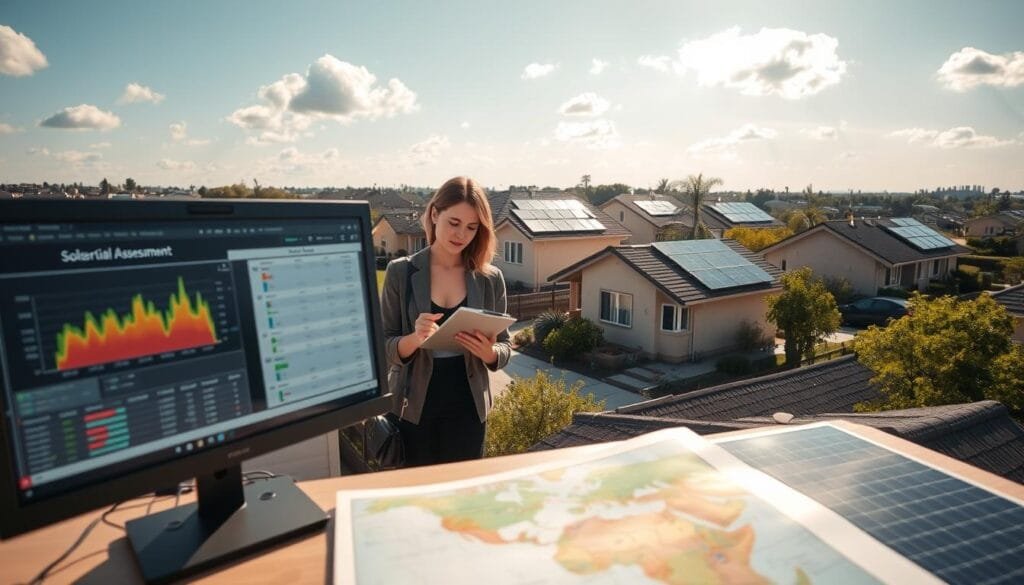
Doing a site survey is key to checking your property’s solar potential. You’ll look at how much space you have on your roof or walls. You also need to check for any shading issues.
Measuring Available Roof and Wall Space
Measuring your roof or wall space is crucial. You need to know the size, shape, and how it faces the sun. This ensures you can fit enough solar panels.
Key factors to consider when measuring available space:
- Roof size and shape
- Orientation and pitch of the roof
- Obstacles such as chimneys or skylights
- Wall space availability and orientation
Analysing Shading Patterns and Sun Exposure
Shading can affect how well your solar system works. Look at the shading on your property during the day and year. This helps you find the best spot for your solar panels.
Consider using tools or software to help assess shading patterns and sun exposure.
Evaluating Structural Integrity and Load Capacity
Before you install solar panels, check if your property can handle them. Make sure your roof or wall can support the panels and their mounts.
Key factors to consider when evaluating structural integrity:
- Age and condition of the building
- Type of construction and materials used
- Existing damage or weaknesses
Determining Your Energy Consumption and System Requirements
To pick the right solar system size and type, look at your energy use. Check your energy bills to see how much you use daily.
Consider the following when determining your energy consumption:
- Average daily energy usage
- Peak energy demand periods
- Energy efficiency measures already in place
By following these steps, you can figure out if your property is good for solar power. You’ll know the best solar system for your needs.
Navigating Urban Solar PV Installation Regulations
To install solar PV systems in cities, knowing local rules is key. The UK’s rules cover zoning, building codes, permits, and working with grid operators.
Understanding Local Zoning and Building Codes in the UK
Local rules affect your solar project’s success. These rules change by area in the UK. It’s important to check with local authorities to follow these rules.
Key aspects to consider include:
- Height and size limits for solar panels
- Rules for conservation areas
- Building codes for safety
Solar Permitting and Compliance Requirements
Getting the right permits is crucial for solar installations. The UK has clear rules for permits.
Permitted Development Rights
Many solar installations fall under permitted development rights. This means you might not need full planning permission. But, there are rules and limits to follow.
Planning Permission for Listed Buildings
If your home is listed, you’ll need planning permission for solar panels. You’ll need to submit detailed plans. These plans must show the installation won’t harm the building’s history or design.
| Property Type | Permitting Requirement | Additional Considerations |
|---|---|---|
| Standard Residential Property | Permitted Development Rights | Check local conservation area rules |
| Listed Building | Planning Permission | Consult with local heritage authorities |
| Commercial Property | Varies; often requires planning permission | Assess structural integrity and load capacity |
Working with Distribution Network Operators
After installing your solar system, you’ll need to connect to the grid. You’ll work with your local Distribution Network Operator (DNO). They’ll check your system meets their standards.
By following these rules, you can have a successful solar installation in the city.
Advanced Mounting Solutions for Space-Constrained Environments
In cities, finding space for solar panels can be tough. But, new solar PV mounting solutions can help. They make the most of space and energy.
Tile Roof Mounting Systems for Traditional UK Properties
Tile roof systems are great for UK homes. They keep the roof looking good while adding solar panels.
In-Roof vs On-Roof Systems
For tile roofs, you can choose in-roof or on-roof systems. In-roof systems blend into the roof for a clean look. On-roof systems sit on top, making installation easier.
Protecting Your Roof Integrity
Installing tile roof systems needs careful planning. It’s important to avoid damaging the roof. Working with experts ensures a safe and watertight setup.
Solar Canopies for Car Parks and Outdoor Spaces
Solar canopies are great for car parks. They offer shade and turn unused space into energy-generating areas.
- Provide shade and shelter for vehicles and pedestrians
- Generate clean energy and reduce carbon footprint
- Can be designed to match the surrounding architecture
Building-Integrated Photovoltaics (BIPV) for Seamless Integration
BIPV is a modern way to make solar energy. It puts solar panels into the building, making it look good and work well.
Façade-Mounted Systems
Façade-mounted BIPV systems put panels on the building’s face. They make electricity and improve the building’s look.
Solar Glazing Solutions
Solar glazing puts photovoltaic cells in windows. This way, you get electricity without losing natural light.
Modular Mounting Assembly for Flexible Installations
Modular mounting systems are flexible and adaptable. They fit many places and situations, making solar energy easy to use.
These advanced solutions help solve space problems in cities. They make solar energy a real option for everyone.
Selecting Energy-Efficient Technology and Equipment
To get the most out of urban solar PV systems, choose top-notch, energy-saving tech and gear. It’s key to know the pros and cons of different parts to make sure your system works its best.
High-Efficiency N-Type Modules for Maximum Output
N-type modules are becoming a top choice for urban solar systems. They perform better and last longer. A study found they work better in hot weather and don’t lose power as fast as older types.
“N-type modules have shown a significant reduction in degradation over time, enhancing overall system performance and longevity.”
When picking N-type modules, you can choose between monocrystalline and bifacial. Monocrystalline modules are efficient and look good, perfect for city homes. Bifacial modules catch sunlight from both sides, boosting energy by up to 25%. Bifacial modules work great in cities with shiny surfaces.
Selecting Appropriate Wattage for Limited Space
In tight city spaces, picking the right wattage for solar modules is key. Higher wattage means more power per square metre. But, make sure it fits your building and system design. Getting advice from a pro can find the best wattage for you.
Inverter Technologies for Urban Solar Panel Systems
Inverters turn DC power from solar panels into AC power we can use. There are string inverters, microinverters, and power optimisers. Microinverters and power optimisers are great for complex city roofs or where shadows fall.
- String inverters are affordable and good for simple setups.
- Microinverters offer detailed control and monitoring at the module level.
- Power optimisers strike a balance, improving energy output at the module level while using a central inverter.
Battery Storage for Enhanced Energy Independence
Battery storage boosts your solar system by saving extra energy for later. When picking a battery system, think about its size, how much energy it can hold, and if it fits with your solar system.
By choosing the right tech and gear, you can make your urban solar system work better. This helps make our future greener and more energy-independent.
Step-by-Step Installation Process for Urban Solar Power Installation
Installing solar PV in urban areas is complex. It needs careful attention and safety rules. Knowing the installation steps is key for a good system.
Step 1: Preparing Your Site and Ensuring Safety Compliance
Before starting, prepare your site and follow safety rules. This step is crucial for a smooth installation.
Setting Up Scaffolding and Access Equipment
Safe working needs proper scaffolding and access gear. Scaffolding must be strong and safe to avoid accidents.
Protecting Your Property During Installation
Protect your property from damage. Cover floors and surfaces, and dispose of debris properly.
Step 2: Installing the Mounting Structure
The mounting structure is vital. It supports the solar panels.
Securing Roof Anchors and Rails
Roof anchors and rails must be securely fastened to handle weather. A strong structure is key for system longevity.
Ensuring Waterproof Sealing
Step 3: Mounting Solar Panels and Making Electrical Connections
With the structure ready, install panels and connect them electrically.
Panel Placement and Optimisation
Place panels for best sunlight. Angle and orientation are crucial for energy.
DC Wiring and Cable Management
Proper DC wiring and cable management are vital. Cables should be neat and secure.
| Installation Step | Key Considerations | Importance Level |
|---|---|---|
| Site Preparation | Safety compliance, scaffolding | High |
| Mounting Structure Installation | Roof anchors, waterproof sealing | High |
| Solar Panel Installation | Panel placement, DC wiring | High |
Step 4: Inverter Installation and System Testing
The inverter changes DC to AC power. It’s essential for your home or business.
Step 5: Grid Connection and Final Inspection
Connect to the grid and inspect everything. This ensures your system works well.
By following these steps, you can have a successful solar PV installation. It will meet your energy needs and follow safety rules.
Conclusion
By using urban solar PV systems, you help make cities greener. Understanding the challenges and benefits is key. Also, using the latest mounting solutions and energy-saving tech is important.
This guide showed how to check your property for solar use, deal with rules, and pick the best tech. Using solar energy cuts down on fossil fuels. It also makes cities cleaner and healthier for everyone.
Adding energy-saving tech to solar systems makes them even better. This makes solar power a smart choice for homes in the UK. As more people want to live sustainably, solar systems will become even more crucial for our energy future.