
Beyond Clean Energy: Scaling Nature-Positive Utility Solar for Biodiversity and Yield
Imagine walking through a lush meadow where bees hum softly, like the quiet power of the sun. You might feel a deep sense of hope. You realise our path to net zero doesn’t have to harm our natural world.
As we move towards renewable energy, we face a big challenge. We need to grow these technologies carefully. We must make sure our shift is good for nature, protecting the beautiful British landscapes we cherish.
Well-designed solar farms can be vibrant hubs for nature, not just industrial spots. By focusing on environmental sustainability, we can make places where wildlife and clean energy coexist.
This way, we can meet the UK’s green goals while boosting biodiversity in the countryside. It brings together modern tech and nature, for the benefit of all future generations.
Table of Contents
1. The Shift Towards Environmental Sustainability in UK Utility Solar
The UK’s solar industry is changing. It now focuses on clean energy and protecting the environment. As more people want renewable energy, solar farms are becoming greener.
1.1 Current State of Utility-Scale Solar Development
In the UK, most solar farms are built on land that’s not very valuable for nature. Before starting, detailed checks are done to find out about local wildlife and plants. This helps understand how the solar farm might affect the environment.
Key practices in current utility-scale solar development include:
- Conducting thorough environmental impact assessments
- Selecting sites that minimise harm to existing ecosystems
- Implementing measures to reduce the carbon footprint of solar farm construction
1.2 Environmental Concerns with Conventional Solar Farms
Traditional solar farms can harm the environment. They can destroy habitats and upset local ecosystems. The big areas needed for solar panels can also cause land use conflicts, especially in areas that are very important for nature.
Some of the key environmental concerns associated with conventional solar farms are:
- Loss of Biological diversity due to land clearance
- Soil erosion and degradation
- Water usage and potential pollution
1.3 The Nature-Positive Solar Movement
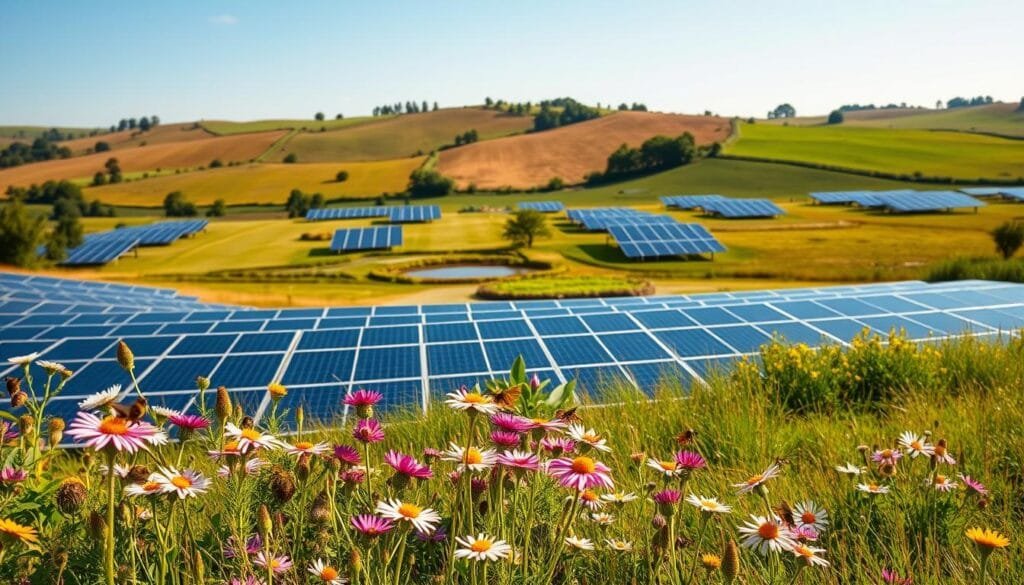
The nature-positive solar movement is growing. It aims to make solar farms better for nature. This means designing and managing them to help Biological diversity and ecosystems.
Nature-positive solar involves:
- Designing solar farms that incorporate ecological restoration
- Implementing practices that promote Biological diversity, such as pollinator-friendly habitats
- Monitoring and managing the environmental impact of solar farms over their lifetime
2. Conventional Versus Nature-Positive Utility Solar: A Comprehensive Comparison
Utility solar is changing, with a focus on designs that help nature. It’s important to know the difference between old and new solar setups.
2.1 Conventional Utility Solar Installations
For years, solar farms have been built to make lots of energy. They are the standard in the field.
2.1.1 Design and Land Management Characteristics
Old solar farms have rows of panels on fixed frames. They keep the land simple to save money on upkeep.
- Panels are set out in a grid to use space well.
- They cut or trim plants to stop them blocking sunlight.
- The land is made flat for the panels.
2.1.2 Ecological Impact Profile
Old solar farms can harm local wildlife and nature.
Key ecological concerns include:
- They can destroy habitats and split up ecosystems.
- They can mess up local nature.
- They can cause soil to wash away.
2.1.3 Advantages of Traditional Approaches
Even with the downsides, old solar farms have benefits. These include:
- They cost less to start.
- They have well-known ways of being set up and looked after.
- They make a lot of energy.
2.1.4 Disadvantages and Environmental Costs
But, old solar farms have big environmental costs. These include:
- They can hurt biodiversity.
- They can damage soil.
- They can mess up local water cycles.
2.2 Nature-Positive Utility Solar Installations
New solar farms focus on saving nature and making energy. This is a big change in the field.
2.2.1 Multi-Functional Green Infrastructure Design
New solar farms use multi-functional green infrastructure. This means they help nature while making energy.
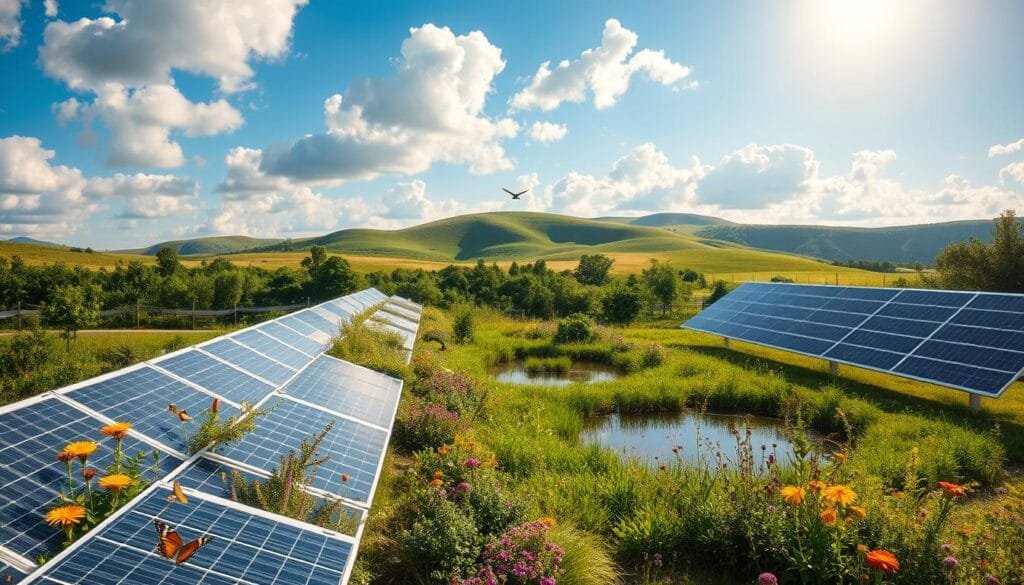
- They use native plants to help animals.
- They make places for wildlife.
- They use green ways to manage the land.
2.2.2 Ecological Conservation Integration
Helping nature is key to new solar farms. They focus on:
- Fixing damaged lands.
- Improving nature’s services.
- Creating homes for pollinators.
2.2.3 Advantages of Nature-Positive Approaches
New solar farms have big benefits. These include:
- They help more animals and plants.
- They improve nature’s services.
- They might be more accepted by people.
2.2.4 Challenges and Implementation Barriers
But, new solar farms face big challenges. These include:
- They cost more to start.
- They need special design and care skills.
- They might take longer to build.
3. Enhancing Biological diversity Through Solar Ecological Restoration
By using nature-positive practices, you can boost Biological diversity in your solar farms. Solar ecological restoration turns solar farms into ecosystems that support many species. This helps the environment and can also improve soil carbon sequestration and pv yield gains.
3.1 Pollinator-Friendly Solar: Design and Implementation
Creating solar farms that are good for pollinators is key to boosting biodiversity. This means planting different types of plants that help bees and butterflies. It makes a healthy ecosystem that’s good for the environment and the solar farm.
To make pollinator-friendly solar work, you need a good plan. Choose the right plants, control invasive species, and keep the habitat healthy. Good management leads to better ecosystems and more biodiversity.
3.2 Establishing Biodiversity Performance Metrics
It’s important to have clear ways to measure biodiversity success. Look at things like how many species there are, how good the habitat is, and how well the ecosystem works. This lets you see if your plans are working and make them better.
Having these metrics also shows the good your solar farm does for the environment. This is important for getting support and money for your projects.
3.3 Soil Health and Carbon Sequestration Benefits
Improving soil health is a big part of solar ecological restoration. Healthy soil supports many living things, which helps with soil carbon sequestration. This is good for the climate and makes the ecosystem stronger.
To improve soil health, use practices like not tilling too much and adding organic stuff. These help build up the soil, make it better, and support biodiversity.
3.4 Creating Connected Habitats Across Solar Sites
It’s important to make habitats in solar farms connect with each other. This helps species move around and makes ecosystems stronger. Work with other landowners and conservation groups to make these connections.
Connected habitats mean more biodiversity, better ecosystem services, and a stronger climate. By working together, we can make solar energy more sustainable and positive for nature.
| Biodiversity Enhancement Strategy | Benefits | Implementation Considerations |
|---|---|---|
| Pollinator-Friendly Solar | Supports local pollinators, enhances ecosystem services | Selecting appropriate plant species, managing invasive species |
| Soil Health Improvement | Enhances soil carbon sequestration, improves ecosystem resilience | Regenerative agricultural practices, reduced tillage, organic amendments |
| Connected Habitats | Supports wider ecological networks, enhances biodiversity | Collaboration with neighboring landowners, conservation organizations |
4. Energy Performance Comparison: Yield Outcomes and Efficiency
The solar industry is changing, focusing on systems that are good for nature. These systems make clean energy and help biodiversity. They aim to solve problems with traditional solar farms.
It’s important to know how these new systems compare in energy performance. This helps us understand their benefits.
Measuring PV Yield Gains in Nature-Positive Systems
Nature-positive solar systems aim to boost energy and nature health. Studies show they can increase energy production and biodiversity. For example, a UK study found better air and cooler temperatures in these designs.
“Using nature in solar farm design boosts energy and cuts costs,” an expert notes. This is good for the planet and the solar farm’s efficiency.
How Vegetation Management Affects Panel Performance
Managing plants is key for nature-positive solar systems. It keeps panels working well and the ecosystem healthy. By choosing the right plants, operators can reduce shadows and cool panels, improving their efficiency.
Operational Cost Comparisons Over Project Lifetime
Nature-positive solar systems often cost less to run than old systems. They need less upkeep and last longer. This means lower costs over time.
- Less maintenance thanks to better ecosystems
- Lower costs for plant care
- More money from nature services
Real-World Performance Data from UK Solar Farms
Data from UK solar farms backs up nature-positive systems. They produce more energy and cost less to run than old farms. For example, a farm with pollinator habitats in the UK saw more energy and lower upkeep costs.
| Performance Metric | Conventional Solar | Nature-Positive Solar |
|---|---|---|
| Energy Yield | Baseline | +5% |
| Operational Costs | Baseline | -10% |
5. Maximising Utility-Scale Land Use Co-Benefits in Your Solar Projects
When looking into utility-scale solar projects, think about how to use land wisely. These projects can do more than just make clean energy. They can also help nature, improve the economy, and make land more valuable.
Co-Located Solar and Agriculture: Agrivoltaic Opportunities
Agrivoltaics mix solar panels with farming. This way, you can grow crops and make energy at the same time. It makes better use of land.
Using agrivoltaics can boost crop yields and improve soil health. It also makes clean energy. Studies show it’s great for crops that like shade, like lettuce and spinach.
Integrating Livestock Grazing with Solar Arrays
Adding livestock grazing to solar farms is another smart move. It keeps the area around panels clean and healthy. This cuts down on upkeep costs and boosts nature’s health.
Grazing also keeps ecosystems balanced by controlling plant growth. It makes the area more diverse and strong.
Economic Advantages of Multi-Fused Land Use
Using land for many things, like agrivoltaics and grazing, can be very profitable. It creates different ways to make money from one piece of land. This makes projects more viable and boosts returns.
A study showed agrivoltaics can increase land use by up to 70%. It’s a good choice for those who own land or want to develop it.
Ecosystem Management and Long-Term Stewardship
Good management and care for the long term are key for solar projects. It’s about keeping nature healthy and watching over the ecosystem. This ensures the project stays sustainable.
By caring for the land over time, you can reduce harm to the environment. Work with local groups and experts to find the best ways to manage the land.
6. Conclusion
The solar industry is growing fast. Using nature-positive methods can help a lot with cutting down carbon emissions and protecting biodiversity. By focusing on solar power that’s good for the environment, we can keep energy levels up while helping nature.
It’s important to make sure all planning groups follow the same rules. They should also keep an eye on how solar farms do over time. This will make the solar industry even greener and help the UK use more renewable energy.
Using solar power in a way that’s good for nature has many benefits. It improves biodiversity, boosts nature’s services, and keeps energy quality high. As we move forward, we need to keep finding new ways to be green and keep our commitment to the planet strong.
By thinking about nature when we plan solar farms, we can make the industry better for the planet. This way of working is key to keeping our environment healthy and supporting the UK’s biodiversity goals for the long term.