
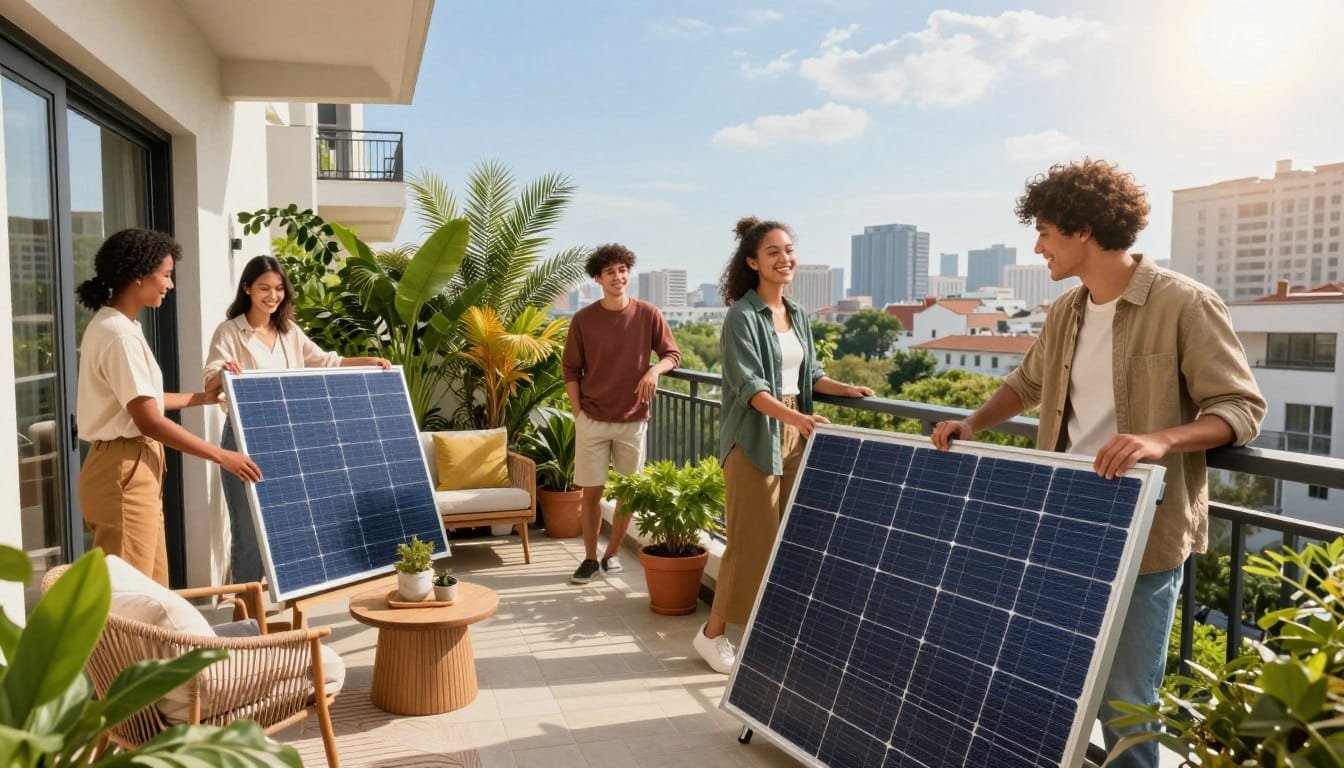
Balcony Solar: Empowering US Renters with Portable Clean Energy
Imagine looking out from your high-rise flat and feeling a sense of purpose. For years, making your own power seemed like a dream for those with big gardens or permanent homes. You might feel stuck with monthly bills that keep going up.
But now, a change is coming across the Atlantic. States like California and New York are pushing for renter-friendly clean energy. They aim to maximise efficiency and organise better ways to control your utility costs.
Research from the Environmental Working Group is promising. A 400-watt balcony solar unit can cut your flat’s electricity needs by 14 per cent. This simple step could save you about $250 a year and help the planet.
It’s a step towards personal freedom and a greener future for city dwellers. By using these small systems, you can lower your carbon footprint without a rooftop. The move to a cleaner grid is now open to everyone.
Table of Contents
Understanding the Potential of Balcony Solar
Europe’s success with balcony solar is inspiring other places, like the UK. Over 4 million systems are installed in Germany alone. This shows balcony solar’s power to give renters clean energy.
The tech behind Micro photovoltaic is simple. It uses panels and inverters that plug into outlets. This makes it great for renters who want clean energy easily.
How Plug-in Solar Systems Work for UK Apartments
Plug-in solar systems are easy to use and fit many apartments. They have panels, an inverter, and a plug for your outlet. The inverter changes the DC power from panels to AC for your appliances.
In UK apartments, these systems are a big plus. They don’t need big changes to your electrical setup. They’re also safe and efficient, letting you enjoy solar energy safely.
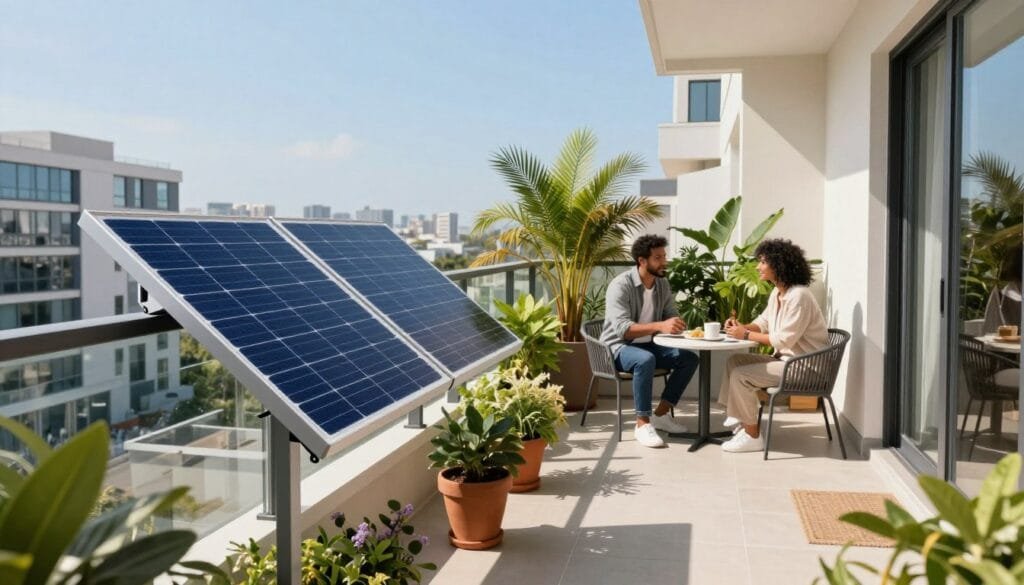
Legalising Balcony Solar and Planning Permissions
Knowing the law about balcony solar is key in the UK. The rules can differ by area. Usually, permitted development rights let you install solar panels without full planning permission, if you meet certain conditions.
It’s crucial to talk to your local planning authority. They can tell you what’s allowed in your area. This includes rules on panel size and where they can go on your balcony.
| Aspect | Requirement | Notes |
|---|---|---|
| Planning Permission | Generally not required under permitted development rights | Check with local authority for specific conditions |
| Size and Placement | Subject to local regulations and property type | Ensure compliance to avoid any legal issues |
| Safety Standards | Must comply with UK electrical and building standards | Ensure the system is installed by a certified professional |
Key Benefits of Renter-Friendly Clean Energy
Balcony solar is good for renters in many ways. It’s a great choice for those wanting to cut down on carbon emissions. Here are some main benefits:
- Reduced Energy Bills: You can make your own clean energy. This means you use less from the grid and pay less for energy.
- Increased Energy Independence: Balcony solar lets you control your energy. You don’t have to rely on your landlord or the grid as much.
- Environmental Benefits: Using solar energy helps cut down on greenhouse gases. This makes the environment cleaner.
In summary, balcony solar is a good choice for UK renters. Knowing how it works, the legal side, and its benefits can help you decide to use it.
Top Balcony Solar Solutions for Your Home
Balcony solar solutions are a great way to make clean energy for your apartment. There are many options out there, making it hard to choose the right one. Here’s a look at some top balcony solar solutions to help you decide.
EcoFlow PowerStream Microinverter System
Overview
The EcoFlow PowerStream Microinverter System is easy to use and efficient. It lets you make clean energy and send it back to the grid, cutting down your energy bills.
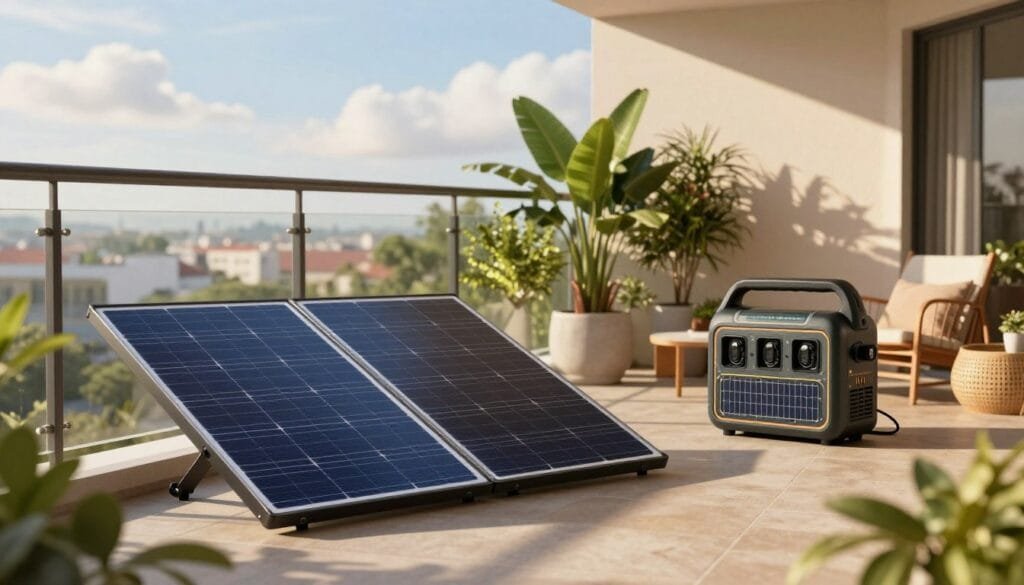
- Efficient Energy Conversion: The microinverter tech makes sure you get the most energy from your solar panels.
- Easy Installation: You can install it yourself, which is great for renters and homeowners.
- Real-time Monitoring: The EcoFlow app lets you see how much energy you’re making and using in real-time.
Cons
- Initial Investment: The EcoFlow PowerStream Microinverter System costs a bit more upfront.
- Compatibility: Make sure it works with your solar panels.
Features
- High-Efficiency Microinverters: They help get the most energy from your solar panels.
- Plug-and-Play Design: It’s easy to set up and start using.
- Monitoring and Control: Use the EcoFlow app to track your energy use and production.
Anker SOLIX Balcony Solar System
Overview
The Anker SOLIX Balcony Solar System is a popular choice for clean energy. It’s small and efficient, perfect for tiny balconies.
Pros
- Compact Design: Great for small balconies or tight spaces.
- High Efficiency: Anker’s tech ensures you get the best energy output.
- User-Friendly: It’s easy to install and use.
Cons
- Limited Power Output: It might not be enough for bigger energy needs.
- Customer Support: Some users have had mixed experiences with customer support.
Features
- Compact and Lightweight: It’s easy to put on small balconies.
- Efficient Solar Panels: They help you get the most energy.
- Simple Installation: It’s designed for DIY installation.
Deye Balcony Solar Power Station
Overview
The Deye Balcony Solar Power Station is a strong and efficient choice. It gives you a reliable source of clean energy for your home.
Pros
- High Capacity: It’s good for bigger energy needs.
- Reliable Performance: Deye’s tech means consistent energy.
- Expandable: You can add more as your energy needs grow.
Cons
- Higher Cost: It costs more upfront than some other options.
- Complexity: You might need a pro to install it for the best results.
Features
- High-Capacity Battery: Stores extra energy for later use.
- Advanced Monitoring: You can watch your energy use and production in real-time.
- Expandable System: You can grow it as your energy needs increase.
Essential Balcony Solar System Requirements
When you think about a balcony solar system, there are important things to check. To make the most of your apartment solar panels, look at your balcony’s setup. You also need to follow safety and building rules.
Assessing Your Balcony Orientation and Sunlight Exposure
The success of your balcony solar system depends on sunlight. Checking your balcony’s direction is key. A south-facing balcony gets the most sunlight in the UK.
Watch your balcony at different times and seasons. Think about any blocks like buildings or trees that might shadow your panels.
Safety Standards for Solar Microinverters
Safety standards for solar microinverters are very important. These devices change DC power from solar panels to AC power for your home. Make sure to pick microinverters that meet UK safety rules and have the right certifications.
Look for microinverters with safety features. These include overheat protection, ground fault detection, and anti-islanding protection. These help avoid electrical dangers and fires.
Mounting and Structural Considerations for Renters
As a renter, think about the mounting and structural parts of your solar system. The mounting must be strong and not harm your balcony or the building. Check your lease to see if you can make changes.
Pick a mounting system made for balconies. It should be easy to put up and take down. Talk to your landlord or a pro installer to make sure it’s installed safely.
Navigating Installation and Setup
Starting your journey to use solar power on your balcony is exciting. Knowing how to install and set up is key. This knowledge helps you make smart choices and ensures a smooth switch to clean energy.
Step-by-Step Guide to DIY Solar Kits
DIY solar kits have changed how we install solar panels. These kits come with pre-drilled panels, an inverter, a mounting system, and cables. Here’s how to install your DIY solar kit:
- Carefully unpack and check the components for damage.
- Follow the instructions to assemble the mounting system.
- Attach the solar panels to the mounting system.
- Connect the panels to the inverter.
- Link the inverter to your home’s electrical grid.
Always follow the manufacturer’s instructions and take safety precautions to avoid electrical shock or other hazards.
Connecting Your System to the Grid Safely
Connecting your balcony solar system to the grid needs careful attention to safety. Make sure your system is designed for grid connection and you have the right permissions from your landlord or building management.
| Safety Measure | Description |
|---|---|
| Use a certified inverter | Ensure the inverter is certified for grid connection and compliant with local regulations. |
| Follow manufacturer guidelines | Adhere to the manufacturer’s instructions for installation and connection. |
| Consult a professional if unsure | If you’re unsure about any aspect of the installation, consult a qualified electrician. |
Optimising Energy Output for Apartment Living
To get the most from your balcony solar system, consider these factors:
- Orientation and tilt: Adjust the angle and orientation of your solar panels to capture the most sunlight.
- Shading: Minimise shading from nearby objects or buildings.
- Panel cleanliness: Regularly clean your solar panels to maintain efficiency.
By following these guidelines and taking the necessary precautions, you can enjoy a reliable and efficient solar power balcony system.
Overcoming Common Challenges for Apartment Solar Panels
Installing balcony solar systems offers many benefits. Yet, there are obstacles to overcome, especially for renters. With the right information and strategies, you can successfully install and operate them. This way, you can enjoy the benefits of clean energy.
Dealing with Landlord Permissions and Tenancy Agreements
One major concern for renters is getting permission from landlords. It’s crucial to check your tenancy agreement for any rules or requirements. Explaining the benefits of balcony solar, like higher property value and lower energy bills, can ease landlord worries. You might also offer to take the system with you when you leave or propose a maintenance plan.
A study found that landlords are more likely to agree if they see the long-term benefits.
“Showing the value of balcony solar installations for energy efficiency and property value is key to getting approval.”
Managing Space Constraints on Small Balconies
Apartment dwellers often face space issues on small balconies. To solve this, look into compact or plug-in solar systems made for small areas. It’s also important to check your balcony’s sunlight to get the most energy.
- Opt for a solar panel system that fits small spaces well.
- Check your balcony’s sunlight to find the best spot.
- Think about a plug-in solar system for easy setup and less space use.
Maintenance Tips for Portable Clean Energy Systems
To keep your balcony solar system running well, regular maintenance is key. This includes cleaning the panels, checking for damage, and watching the system’s performance. Most plug-in solar systems are easy to use and need little upkeep. Still, it’s important to follow the maker’s advice and do routine checks.
| Maintenance Task | Frequency |
|---|---|
| Cleaning solar panels | Every 2-3 months |
| Checking for damage or wear | Every 6 months |
| Monitoring system performance | Monthly |
Conclusion
Discovering balcony solar shows it’s a growing trend. It offers many benefits to renters, like lower energy bills and a smaller carbon footprint. You can enjoy solar power’s perks without big installations.
The advantages of balcony solar are obvious. It’s a simple, affordable way to use the sun’s energy and cut down on grid use. Solar panels for balconies are now easy to find, fitting your needs perfectly.
Choosing balcony solar means saving on energy costs and helping the planet. As clean energy demand rises, going for balcony solar is a smart move.
With the right balcony solar setup, you can live more sustainably. Look into your options today. Start enjoying the perks of balcony solar for yourself.