
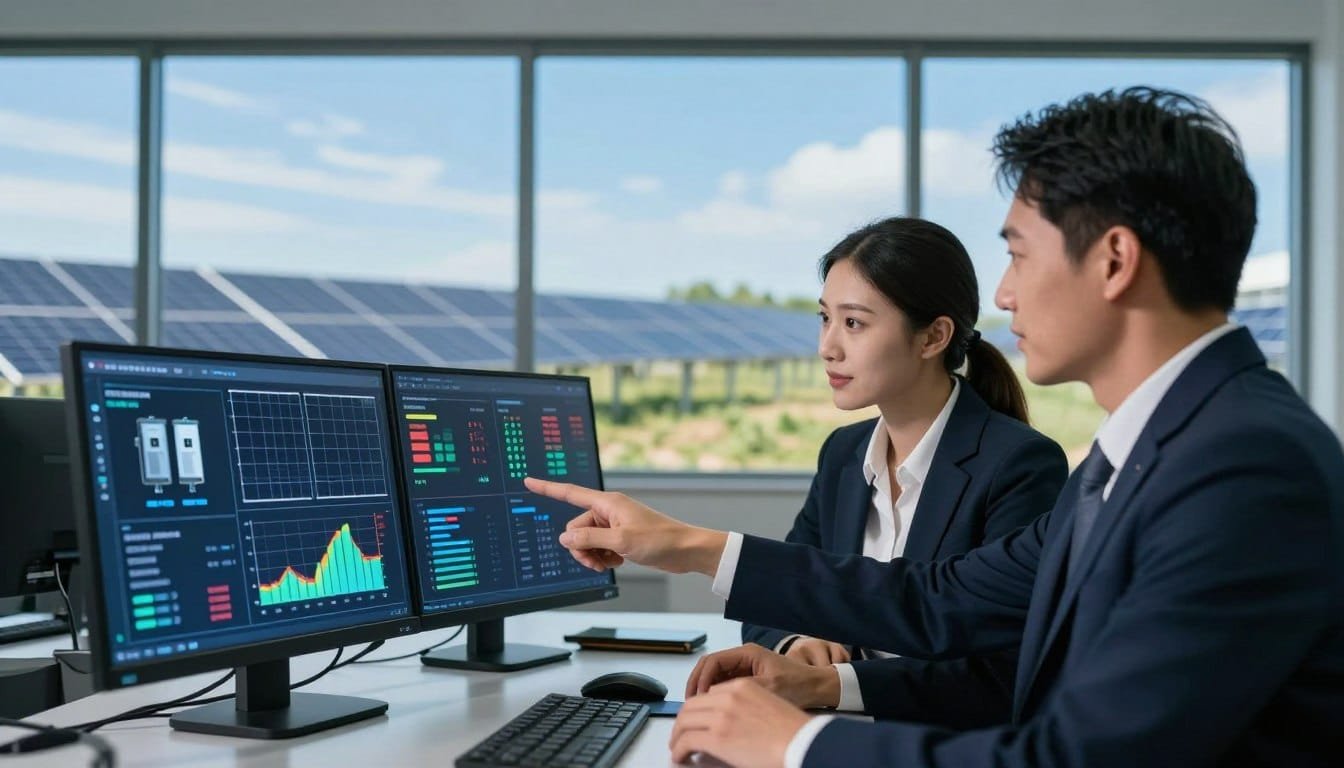
Maximising Solar ROI: The Ultimate Guide to Inverter and Battery Monitoring
Did you know that homes in Britain without storage can lose up to 70% of their solar power? This happens because most power is made when you’re not home. To get the most out of solar energy, you need to monitor it closely. This way, you can use the power when you need it most.
A Battery Energy Storage Unit is key for your home. It stores extra energy from your solar panels for when you need it most. This solves the problem of wasted energy during busy evenings.
Knowing how your system works is the first step to energy freedom. By tracking your inverter and storage, you can cut down on waste and save money. It’s all about making sure everything works together for the best results.
Table of Contents
The Financial and Operational Benefits of Solar System Monitoring
Monitoring your solar system is crucial for getting the most out of it. It brings many benefits, improving both your finances and how well your system works. You can spot where things aren’t working as well as they could and find ways to do better.
One big plus of solar system monitoring is knowing how well your investment is doing. By keeping an eye on your solar panels and battery, you can make sure they’re working their best. This means you save more energy and money.
Understanding Your Return on Investment
To get the best from your investment, you need to know how your solar system is doing. This means tracking inverter and battery performance. Advanced systems give you live updates on how your system is working. This helps you make smart choices to boost its efficiency.
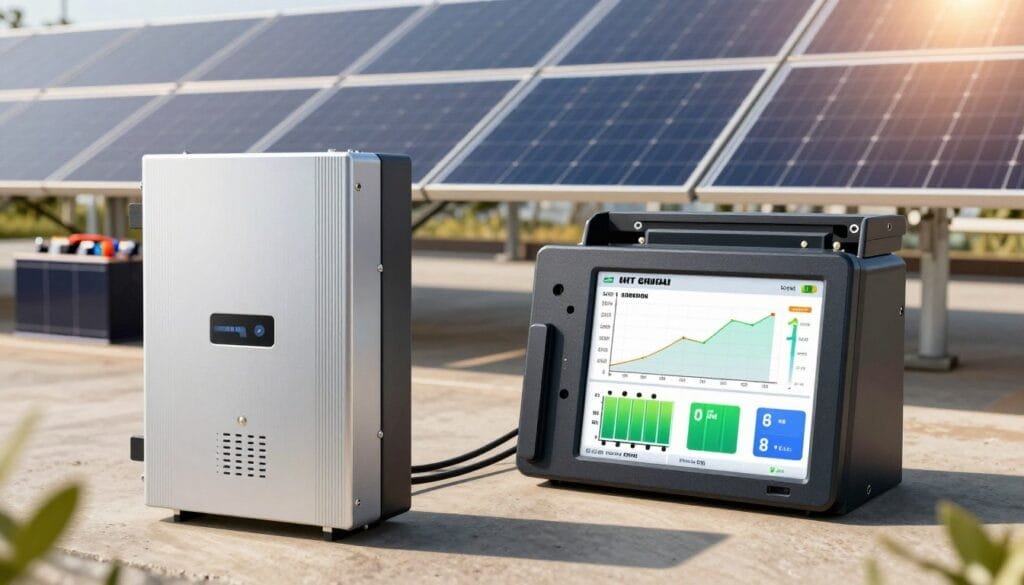
For example, a battery energy storage system (BESS) helps by storing extra energy. This energy is used when the sun isn’t shining as much. Using your BESS wisely can cut down your need for grid power and lower your bills.
Identifying Performance Degradation Early
Another key benefit of monitoring your solar system is catching problems early. By watching how your panels and other parts are doing, you can spot issues before they get worse. This lets you do predictive maintenance, keeping your system running smoothly.
Finding problems early also means you can fix them quickly. For example, if a panel isn’t working right, you can fix it or replace it. This way, you can make more energy and use less grid power.
Essential Components for Effective Solar System Monitoring
To get the most out of your solar system, knowing the key parts of a good monitoring system is important. A full monitoring system lets you see how well your system is doing, spot problems, and boost energy output.
Inverter Power Management Systems
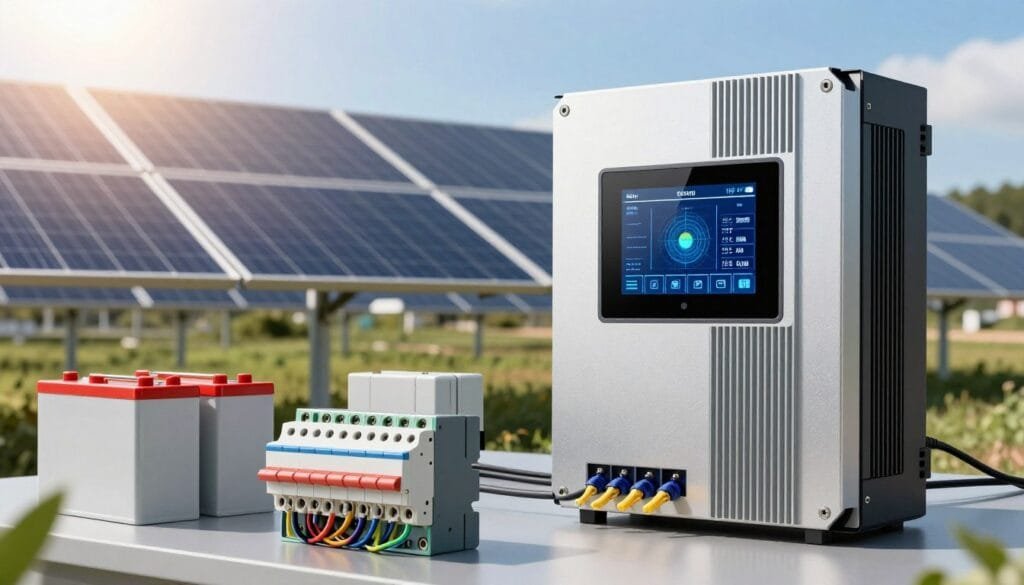
Inverter power management is key for solar system monitoring. A hybrid inverter handles power from solar panels, batteries, and the grid. It makes sure your system works at its best, saving energy and cutting waste. By watching and controlling energy flow, you can use energy wisely.
Battery State of Charge and Health Tracking
Knowing your state of charge (SoC) and battery health is crucial for your solar system’s best performance. SoC tracking shows how much energy is in your batteries. Health tracking tells you how they’re doing. This info helps you use energy better and plan maintenance.
Panel-Level Monitoring vs String Monitoring
There are two main ways to watch your solar panels: panel-level monitoring and string monitoring. Panel-level monitoring gives detailed info on each panel, helping spot and fix problems. String monitoring looks at groups of panels together.
Why Granular Data Matters for Efficiency
Granular data from panel-level monitoring is key for top efficiency. It lets you see if panels are shaded, dirty, or faulty. This way, you can fix issues quickly, keeping your system running smoothly.
In short, good solar system monitoring needs inverter power management systems, battery state of charge and health tracking, and panel-level monitoring. Knowing these parts and how they work together helps you get the most from your solar system.
How to Set Up Your Solar Monitoring Hardware and Software
To get the most out of your solar investment, setting up your monitoring hardware and software right is key. A good solar monitoring system gives you real-time insights into your energy use. This helps you make smart choices to boost your solar return on investment.
Connecting Your Inverter to Local Wi-Fi Networks
The first step is to connect your inverter to your local Wi-Fi. This lets you monitor and control your solar array from anywhere. You can track its performance and get alerts on your phone or computer. To do this, just follow the inverter’s settings menu and the manufacturer’s Wi-Fi setup guide.
Key steps include:
- Make sure your inverter works with your Wi-Fi’s frequency (2.4GHz or 5GHz).
- Put your Wi-Fi’s SSID and password into the inverter’s settings.
- Check the connection is strong and test remote access through the app or web portal.
Configuring Battery Management System Settings
Setting up your battery management system (BMS) is vital for better battery performance and life. The BMS controls how your battery is charged and used. This affects your solar system’s efficiency a lot.
Common settings to configure include:
| Setting | Description | Typical Range |
|---|---|---|
| Charge Threshold | The minimum charge before charging starts. | 20% – 50% |
| Discharge Threshold | The max discharge before charging is needed. | 20% – 80% |
| Charge/Discharge Rate | The rate of charging or discharging. | 0.5C – 1C |
Integrating Third-Party Solar Monitoring Software
Adding third-party solar monitoring software can improve your monitoring. It offers detailed data and predictive maintenance insights. Choose software that fits your hardware, is easy to use, and provides detailed data analysis.
Selecting the Right Dashboard for Your Needs
Choose a monitoring dashboard that’s easy to understand and shows your solar system’s performance clearly. Look for features like real-time data, historical analysis, and alerts for issues.
By setting up your solar monitoring hardware and software well, you can understand your solar system’s performance better. This lets you make informed decisions to improve your energy use and production.
Analysing Real-Time Data to Optimise Solar Self-Consumption
Looking at real-time data can really boost your solar energy use. It lets you see how much energy you’re making and using. This helps you make smart choices to use more of your solar power.
“Being able to watch and change your energy use as it happens is a big deal for those wanting to use less grid power,” says an expert. It not only cuts down on bills but also helps the planet.
Interpreting Daily Energy Production Curves
It’s key to understand your daily energy curves to get the most from your solar. These curves show how much power your solar panels make at different times. By looking at these, you can spot when you’re making the most energy.
For example, if your panels make lots of power in the morning, use big appliances then. This can cut down how much grid power you use.
Adjusting Appliance Usage Based on Solar Yield
Changing when you use appliances based on solar power is simple. Using big appliances when the sun is out can lower your bills and make you more energy independent.
- Find out which appliances use a lot of energy and can be used during the day.
- Plan to do laundry, wash dishes, and other big tasks when the sun is strong.
- Think about getting smart home devices to control your appliances based on solar power.
Managing Battery Discharge Cycles for Maximum Savings
It’s important to manage your battery cycles well to save energy. Using stored power when you need it most or when prices are high can cut down grid use.
Tips for managing battery discharge cycles:
- Keep an eye on your battery’s charge level.
- Change your energy use to use stored power when it’s needed most.
- Think about setting up automatic controls for your battery cycles.
By using these tips, you can make the most of your solar power, lower your bills, and help the planet.
Implementing Predictive Maintenance for Long-Term Reliability
Predictive maintenance is crucial for your solar system’s long life and efficiency. It uses data and analytics to spot problems before they get big. This keeps your solar investment reliable for years.
Proactive maintenance means watching your system closely and fixing small problems fast. This reduces downtime and extends your solar system’s life.
Recognising Warning Signs in Inverter Logs
Inverter logs hold key info about your solar system’s health. Regular checks can show warning signs like temperature or voltage changes. Spotting these early helps fix problems before they get worse.
A sudden temperature rise might mean a cooling issue. Voltage changes could point to inverter or component problems. Fixing these quickly stops damage and keeps your system running well.
Scheduling Professional Inspections Based on Performance Data
While watching your system is important, sometimes you need a pro’s eye. Performance data helps set the best time for these checks. This way, experts can find and fix problems before they cause big issues.
Performance data shows small changes that might not be obvious. A slight drop in efficiency could mean a panel or inverter problem. Regular inspections based on this data keep your system at its best.
Remote Solar Monitoring for Peace of Mind
Remote solar monitoring lets you check your system’s health from anywhere. It gives you peace of mind and quick response to any issues.
With remote monitoring, you get alerts for potential problems. This is especially useful for big solar systems or farms. It cuts costs and boosts efficiency by keeping an eye on things remotely.
Conclusion
Using good solar system monitoring and upkeep can boost your solar ROI. It also makes your energy use more reliable and efficient. Knowing your solar system’s parts and setting up monitoring tools are key steps.
Looking at real-time data helps you improve how you use and produce energy. This way, you can make changes to get the most out of your solar system. Also, using predictive maintenance keeps your system running smoothly for a long time.
Solar system monitoring helps spot problems early, avoiding expensive fixes and downtime. By following this guide, you can make your solar system work at its best. Enjoy reliable, efficient energy for many years ahead.