
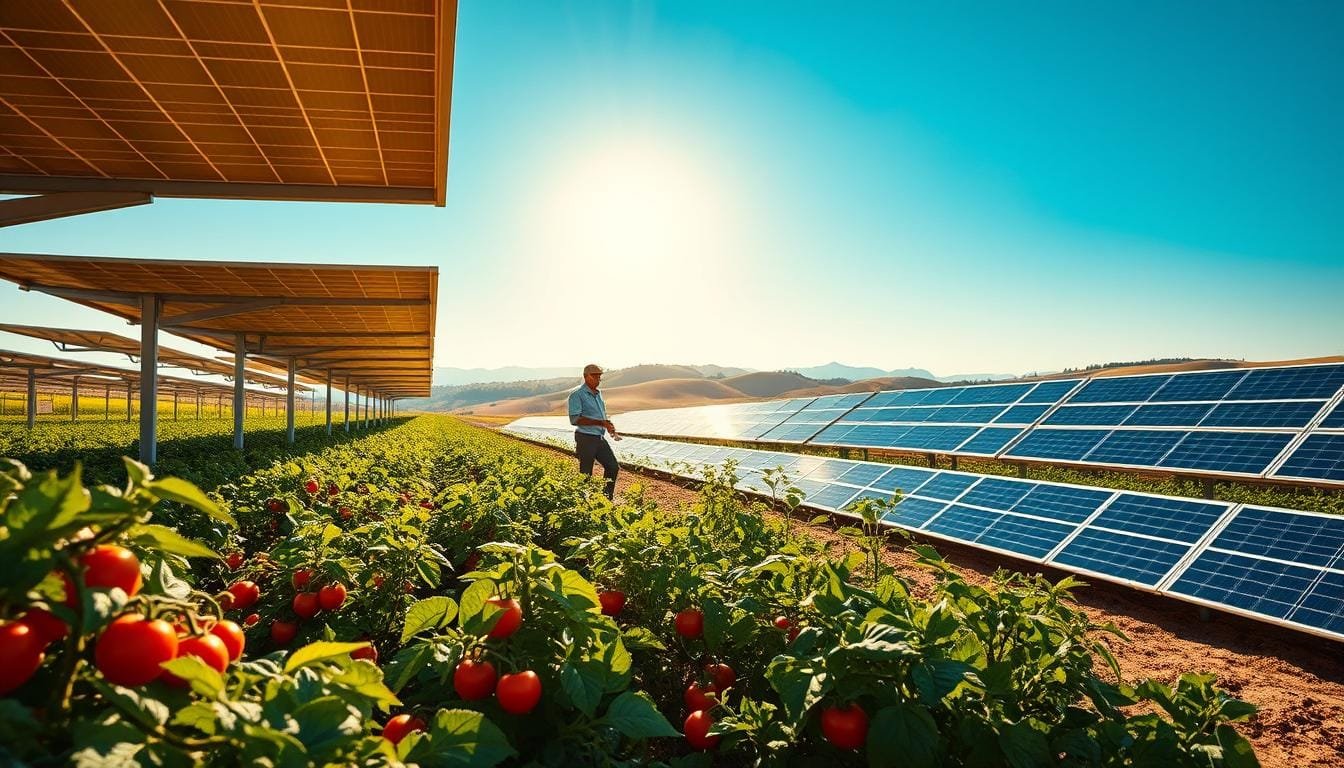
The Dual Harvest: How Agrivoltaics is Revolutionizing Solar Energy and Farming
Have you ever thought about a British countryside plot powering your home and growing your dinner? We’re looking to make more with less, and a smart solution is changing our views on fields.
This new method, called agrovoltaics, lets farmers catch the sun while keeping their crops safe. By putting solar panels over grazing animals or greens, you can update your land without losing its main use.
This system does more than just make clean energy for the local grid. It makes farming more resilient and boosts local economies through better land use.
By combining these systems, you can protect your plants from harsh weather and cut down on water loss. Using agrivoltaics means food security and green energy can grow together.
Table of Contents
Understanding Agrovoltaics: The Future of Dual-Use Land Management
Agrivoltaics is a new way to use land by combining solar panels with farming. It’s getting attention for making land more productive and helping with renewable energy goals.
Agrivoltaics, or agrophotovoltaics, mixes farming with solar energy on the same land. Solar panels are placed high enough for farming to happen below or between them.
What is Agrophotovoltaics?
Agrophotovoltaics is about putting solar panels in farms. By placing panels high, farmers can farm below or between them. This way, land is used better and farm productivity can go up.
Why the UK is Embracing Solar and Agriculture Co-location
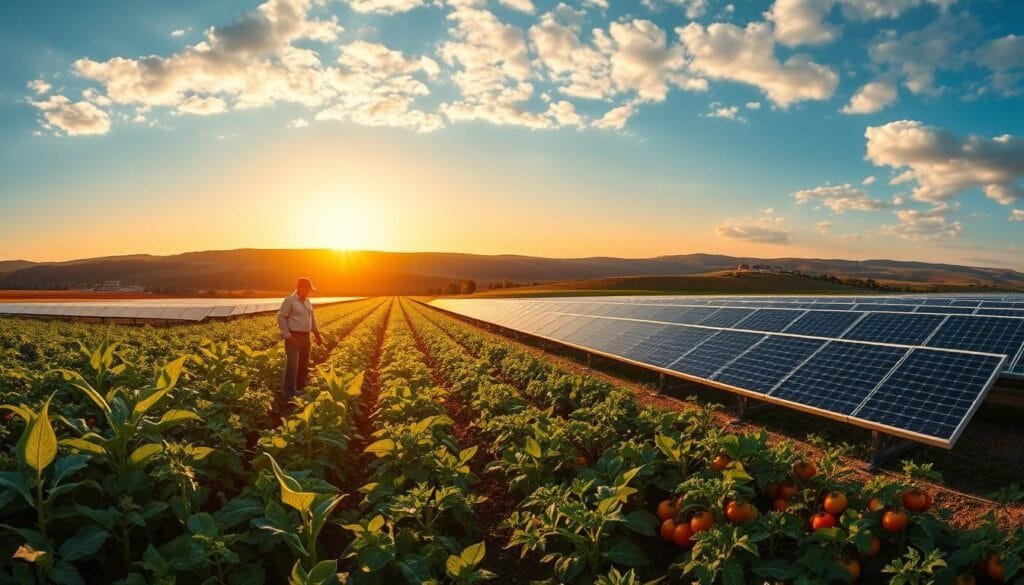
The UK is taking to agrovoltaics to hit renewable energy goals without losing farm productivity. Solar panels and farming together reduce land use conflicts. Farmers also earn extra by selling electricity.
The UK government’s support for green energy and cheaper solar tech has helped. Now, agrivoltaic projects are popping up everywhere. They make farming more sustainable and varied.
The Science Behind Dual-Use Solar Systems
Agrivoltaics works by using land wisely through smart planning. The height and space of solar panels affect how much sun crops get. Some crops grow better in the shade, which can boost their yield and save water.
The area under solar panels can also use water better and help crops handle bad weather. By understanding these benefits, farmers can make their farms more productive and strong.
Assessing Your Land’s Suitability for Agri-PV Implementation
Checking if your land is right for agrovoltaics needs careful thought. You must look at how it affects both solar energy and farming. This ensures your agri-PV project works well.
Evaluating Your Property’s Solar Potential
First, check how much sunlight your land gets all year. Things like the land’s direction, any shadows, and the weather matter a lot. They all affect how well solar panels can work.
Key factors to consider include:
- The average annual sunlight hours
- The slope and orientation of your land
- Potential shading issues
Determining Agricultural Requirements and Current Land Use
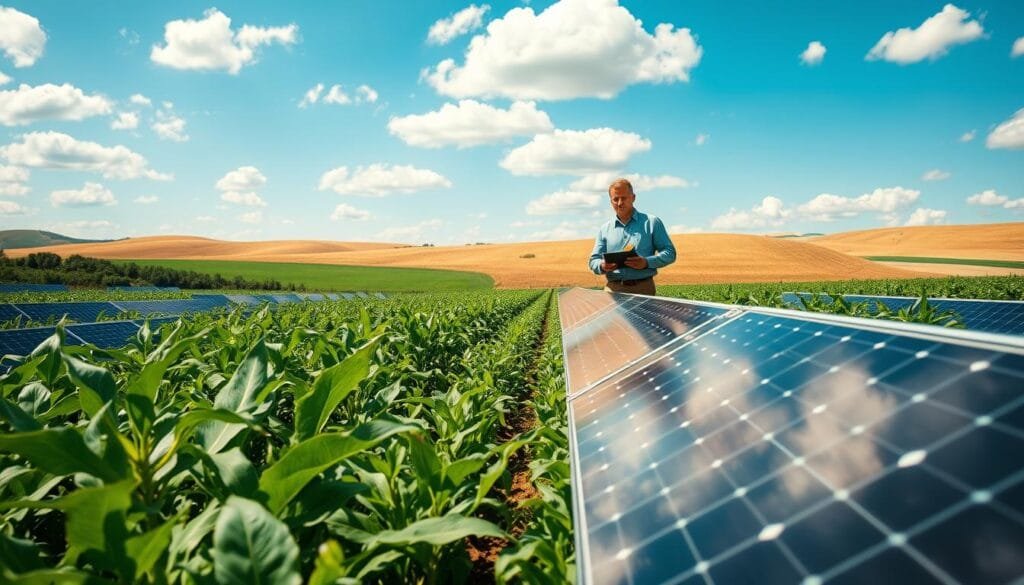
It’s also vital to know about your farming needs and what you’re growing. Look at the soil, the crops, and any farming equipment you have.
Consider the following:
- The type of crops suitable for agrivoltaics
- Soil health and fertility
- Existing irrigation systems
The European Commission sees solar energy as a great help for farming. It can make farming more efficient and help the environment. Plus, it can give farmers more money.
Understanding Planning Permission and Regulations in the UK
Knowing the rules is key for a successful agri-PV project. In the UK, you need to get the right permissions and follow the laws.
Key regulatory considerations include:
- Obtaining necessary planning permissions
- Complying with environmental regulations
- Ensuring grid connection feasibility
By looking at these points, you can see if your land is good for agrovoltaics. Then, you can decide if to go ahead with an agri-PV system.
Agrivoltaics Crop Suitability: Choosing the Right Plants for Your System
To get the most from your agrivoltaic setup, picking the right crops is key. The shade from solar panels can change the area’s climate, boosting farm output. A study in Algeria showed that agrivoltaics can increase yields and crop sizes due to better climate and cooler ground.
Shade-Tolerant Crops That Thrive Under Solar Panels
Crops that do well in shade are perfect for agrivoltaic systems. They use the less sunlight under panels well.
Leafy Greens and Salad Crops
Leafy greens like lettuce, kale, and spinach are great picks. They love the cool, shaded spot under panels. These crops grow fast, making them ideal for agrivoltaic farming.
Root Vegetables and Tubers
Root veggies like potatoes, carrots, and beets also do well. The shade keeps the soil moist, cutting down on water use. This leads to healthier plants and possibly more food.
Livestock Integration: Sheep Grazing and Poultry Farming
Agrivoltaics isn’t just for growing crops; it’s also good for raising animals. Sheep grazing is common under panels, keeping the land in good shape. Poultry farming adds variety, helping farmers earn more.
Optimising Crop Selection for Your Regional Climate
Choosing the right crops for your agrivoltaic system depends on your local climate. Different plants need different temperatures, moisture, and sunlight. Get advice from local farmers and try out different crops to find the best fit.
By picking the right crops and combining them with solar energy, you can boost both your farm’s output and your green energy use.
Implementing Your Agrivoltaic System: A Step-by-Step Approach
Agrivoltaics, or dual-use solar, lets landowners make renewable energy and keep farming. It’s good for the planet and can even increase land value. It also brings in more money through different ways.
Step 1: Designing Your Panel Layout for Maximum Land-Use Efficiency
When setting up your agrivoltaic system, the solar panel layout is key. You must find a balance between solar energy and farming needs.
Think about the space between panels for farm equipment or animals. You might choose a design for tractors or sheep grazing. This way, your land stays useful for both energy and farming.
Efficient land use is vital for agrivoltaic success. Good planning ensures your land works well for energy and farming.
Step 2: Selecting Appropriate Solar Panel Types and Mounting Systems
Picking the right solar panels and mounting systems is important. Look at panel efficiency, durability, and how they fit with farming.
For example, use elevated systems for grazing or farming under panels. The panel height and spacing depend on your farming plans.
Step 3: Installing Infrastructure While Preserving Agricultural Access
When setting up your system, keep farming paths open. Plan during off-peak times or use methods that don’t disrupt farming.
Minimizing disruption to farming is key for your project’s success. Work closely with your team and farmers to achieve this.
Step 4: Establishing Your Planting or Grazing Schedule
After installation, adjust farming to match solar panels. Choose crops that do well in shade or manage grazing times.
Some crops grow better under panels, thanks to the shade. Sheep grazing under panels also uses land well.
By following these steps, you can make your agrivoltaic system work well. It boosts land productivity and helps the planet.
Maximising the Benefits of Agrivoltaics for Farmers and Sustainable Land Productivity
Farmers can make the most of their land by using agrivoltaic systems. These systems mix solar energy with farming. This way, farmers can earn more and use their land better.
Financial Returns
Using land for both food and energy can double a farmer’s income. Solar panels can make extra money. This helps farmers not rely on just one way to make money.
Key financial benefits include:
- More money from selling electricity
- Different ways to make money, which lowers risk
- More money from the land overall
Environmental Advantages
Agrivoltaics also helps the environment. It makes soil better and saves water. Keeping plants under and around panels stops soil from washing away and helps animals.
Some of the environmental advantages include:
- Less soil erosion because of plants
- More animals because of the habitats under panels
- More water saved because of less evaporation and better soil
Operational Benefits
Agrivoltaic systems also help with farming. They reduce stress on crops and let them grow longer. The shade from panels protects crops from bad weather, making them healthier and more productive.
Overcoming Common Challenges
But, there are challenges with agrivoltaics. Farmers need to make sure panels work with farming and don’t harm the local area.
Strategies for overcoming these challenges include:
- Plan and design the system carefully
- Choose the right crops and farming ways
- Watch and manage the system’s effect on the environment
Conclusion
You now know how agrivoltaics can change our view on solar energy and farming. It lets you use solar panels in farms, helping the planet and your wallet.
Agrivoltaics is more than just a thought. It’s something you can start doing now. If you farm, want to cut down on carbon, or explore new ways to use land, you can help make it happen.
This approach has many perks, like better land use and helping the environment. By going for agrivoltaics, you help make the world greener and earn money while doing it.
With what you’ve learned, think about how you can use agrivoltaics in your work or land. The future of solar and farming is being made today. Join in.