
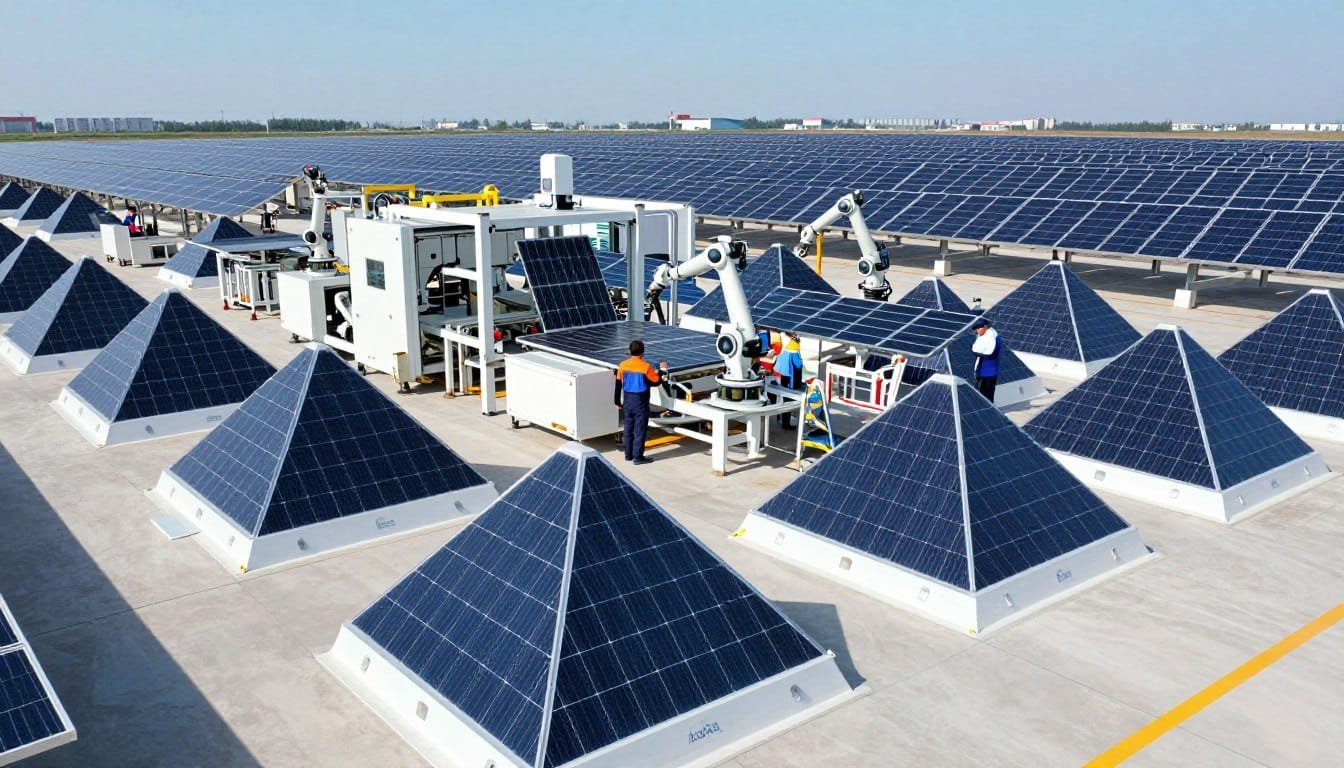
Scaling the 33% Milestone: How ‘Iceberg’ Pyramids Are Revolutionizing Industrial Solar Cells
Did you know that traditional solar panels waste nearly 30% of the sunlight they catch? This huge loss has slowed down the search for lasting energy solutions. Now, a new breakthrough is turning these losses into gains through advanced surface engineering.
The Iceberg pyramid design is transforming the solar industry. It textures silicon surfaces to catch light better than before. By using complex shapes, it keeps more photons inside to make electricity.
Reaching a 33.15% certified efficiency is a big win for the energy world. This achievement shows that top-notch tech can go from labs to factories. It lets your company make more power while optimising space for installation.
These new ideas are key to cutting production costs. Soon, solar energy will be cleaner and cheaper. This change is essential for a world powered by renewable resources.
Table of Contents
The Evolution of Industrially Textured Silicon
The evolution of industrially textured silicon is key to better solar cells. It shows how solar cell tech has grown. This growth is thanks to the improvement in silicon texture.
Textured Silicon Wafer is vital for solar cells. It helps by reducing reflection and boosting light absorption. The unique geometry of textured silicon allows for better light trapping, thereby enhancing the overall efficiency of solar cells.
Moving Beyond Standard Random Pyramids
For a while, standard random pyramids were the norm. But, they have their downsides, like high reflection and low carrier collection. The need for more advanced texturing techniques has driven research into alternative geometries.
Standard random pyramids struggle with surface reflection. This can cut down efficiency a lot. So, scientists are looking into new ways to texture silicon.
The Geometric Advantage of the Iceberg Model
The ‘Iceberg’ Pyramid design has a big edge over old methods. It traps light better and cuts down reflection. This leads to better carrier collection and higher efficiency.
The ‘Iceberg’ Pyramid’s shape boosts carrier collection and cuts down on surface recombination. This makes solar cells more efficient and perform better.
| Texturing Method | Surface Reflection Reduction | Carrier Collection Efficiency |
|---|---|---|
| Standard Random Pyramids | Moderate | Good |
| Iceberg Pyramid | High | Excellent |
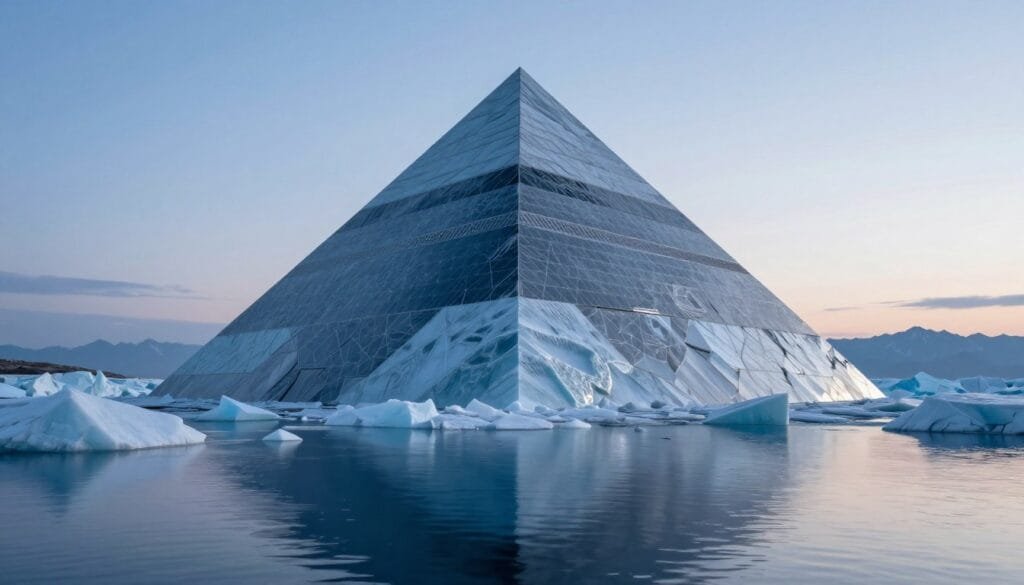
The table shows the ‘Iceberg’ Pyramid beats standard pyramids in reducing reflection and improving carrier collection. It’s a great choice for future solar cells.
Achieving the 33.15% Certified Efficiency Threshold
The quest for better solar cells has led to new ideas, especially in tandem cells. Traditional silicon cells have their limits. Tandem cells, with layers of different materials, aim to break through these barriers.
Tandem solar cells are on the rise, promising higher efficiency than old cells. By mixing silicon with materials like perovskite, they can catch more sunlight. This boosts their overall efficiency.
Overcoming Theoretical Limits in Tandem Cells
Tandem cells aim to beat the limits of single-junction cells. They do this by layering different materials to catch various sunlight wavelengths. The goal is to grab as much sun energy as possible.
Designing tandem cells is tricky. Each layer must work well with others. Engineers focus on perfecting these interfaces to avoid energy loss.
| Tandem Cell Configuration | Theoretical Efficiency Limit | Achieved Efficiency |
|---|---|---|
| Silicon-Perovskite Tandem | 43.5% | 33.15% |
| Silicon-Silicon Tandem | 42.0% | 32.0% |
| Perovskite-Perovskite Tandem | 45.0% | 30.0% |
The Role of Perovskite-Silicon Tandem Stability
Perovskite-silicon tandem cells are promising but need to be stable. They must resist degradation to perform well over time.
Scientists are working on making these cells more stable. They’re using better materials and protective coatings. This will help these cells reach their full potential.

As you work on tandem cells, understanding materials and design is key. This knowledge will help you reach new heights in solar cell efficiency.
Advanced Surface Engineering with SiOx Nanosphere Regulation
Advanced surface engineering, especially SiOx nanosphere regulation, boosts solar cell efficiency. The surface of solar cells greatly affects their performance. By tweaking SiOx nanospheres, scientists can enhance light trapping and cut down on losses.
Controlling Light Trapping at the Nanoscale
Good light trapping is key for solar cells to soak up more sunlight. SiOx nanospheres help make nanostructures that scatter light well. This increases the light’s path in the solar cell.
Experts say, “Nanostructuring surfaces can greatly boost solar cell efficiency. It does this by cutting down on reflection and boosting light absorption.”
“The nanostructuring of surfaces can lead to significant enhancements in solar cell efficiency by reducing reflection losses and increasing light absorption.”
To do this, you need to control the size and spread of SiOx nanospheres.
Interfacial Recombination Reduction Techniques
Interfacial recombination is a big problem in solar cells. It happens at the interfaces between layers. To tackle this, we need to reduce it.
By using advanced methods to passivate these interfaces, we can stop charge carriers from recombining. Passivation techniques, like thin film deposition or nanostructures, help a lot.
SiOx nanosphere regulation also helps by making the surface better. This boosts the solar cell’s efficiency. Mixing SiOx nanosphere control with other techniques can lead to even better results.
Visualising 3D Surface Topography in Industrial Manufacturing
Seeing the 3D surface topography of ‘Iceberg’ Pyramid structures is key for making solar panels on a big scale. When making high-efficiency solar cells, knowing how these structures look is vital. It helps make them work better.
The ‘Iceberg’ Pyramid design is complex. It needs precise visualisation to be even and effective. Advanced tools like microscopy and metrology help map its surface. This lets makers spot and fix any issues.
Mapping the Iceberg Model Architecture
To map the ‘Iceberg’ Pyramid well, makers use different methods. These include:
- Atomic Force Microscopy (AFM) for detailed surface images.
- Scanning Electron Microscopy (SEM) to look at the ‘Iceberg’ Pyramids’ shape.
- Optical microscopy for checking surface quality and evenness.
These methods give a full view of the ‘Iceberg’ Pyramid. They help improve the process of making the texture.
Ensuring Uniformity Across Large-Scale Wafers
Keeping large wafers even is key for solar cells to work well. Makers use in-line metrology and process control to watch and tweak the making process as it happens.
A top solar maker found that using better metrology tools boosted their solar cell uniformity by 15%. This led to a big jump in efficiency.
“The ability to visualise and control the 3D surface topography of solar cells is a game-changer for the industry, enabling the production of higher-efficiency cells with greater consistency.”
The table below shows how different surface topographies affect solar cell efficiency:
| Surface Topography | Efficiency (%) |
|---|---|
| Random Pyramids | 22.5 |
| ‘Iceberg’ Pyramids | 33.15 |
The table clearly shows ‘Iceberg’ Pyramids lead to better efficiency than random pyramids.
Optimising Localised Submicron Contacts
Exploring industrial solar cells, optimising localised submicron contacts is key to high efficiency. These contacts boost carrier collection efficiency and cut down on recombination losses.
Advanced methods like lithography and etching are used to make high-quality contacts. This reduces shunt paths that harm solar cell efficiency.
Enhancing Carrier Collection Efficiency
Improving carrier collection efficiency is vital. Localised submicron contacts play a big role in this. Advanced lithography helps create precise contacts, boosting efficiency.
Submicron contacts lower contact resistance. This increases the fill factor and overall solar cell efficiency.
Minimising Shunt Paths in High-Efficiency Cells
Reducing shunt paths is crucial for high-efficiency solar cells. Shunt paths can cause big losses by offering an alternative current path. This lowers overall efficiency.
Designing and optimising contact layout, and using the right materials, can reduce shunt paths. This ensures solar cells work at their best.
By optimising localised submicron contacts, industrial solar cells’ performance improves. This makes them more suitable for widespread use.
Scaling the Iceberg Pyramid for Mass Production
To make the most of ‘Iceberg’ Pyramid technology, manufacturers must scale it up for big solar production. They face challenges like fitting new texturing methods into old lines. They also need to keep costs down and production high.
Adding ‘Iceberg’ Pyramid texturing to old lines needs careful thought. You must check if it fits well without messing up current work. This might mean updating some gear or tweaking how things are done.
Integrating New Texturing into Existing Production Lines
Scaling ‘Iceberg’ Pyramid tech means making it work with today’s solar making. You have to see if the new method works with what you already have. This might mean changing some stuff or adjusting how things are done.
Key considerations include if you need to update your tools, train staff, and keep quality up. Planning well helps avoid problems and makes the switch smoother.
Economic Viability and Throughput Considerations
When you scale up ‘Iceberg’ Pyramid tech, cost matters a lot. You have to weigh the cost of the new method against its benefits. Doing a detailed cost check is key to seeing if it’s worth it.
How fast you can make things is also crucial. The tech must handle lots of production without losing quality. Optimising process conditions and settings helps meet this goal.
By tackling these issues, you can make ‘Iceberg’ Pyramid tech work for big solar production. This boosts both efficiency and profit in solar making.
Conclusion
You’ve learned about ‘Iceberg’ Pyramids changing the game for solar cells. They’ve hit a certified efficiency of 33.15%. This new design is a big step forward for making solar panels on a large scale.
The ‘Iceberg’ Pyramid’s shape, along with special surface treatments and tiny contacts, boosts how well it collects energy. It also cuts down on energy loss. This makes solar cells more efficient and better at what they do.
As solar tech gets better, using ‘Iceberg’ Pyramids in factories could be a smart move. It could make solar panels cheaper and faster to make. We can look forward to even more progress in making solar panels on a big scale.