
New Hydrogel Coating Reduces Solar Hotspots by 16°C and Increases Yield by 13%
Ever felt let down by a tech that fails when you need it most? In the British summer, your rooftop panels can get extremely hot. This heat can cause dangerous hot spots, damaging your equipment or even starting fires.
Researchers have found a solution to this problem. They’ve created a transparent layer that cools surfaces by 16°C. This keeps your investment in solar energy safe and working well. Using hydrogel solar cooling protects against the sun’s harmful heat.
This new system manages heat better, boosting energy yield by 13%. It’s a big leap towards making clean energy reliable for homes. Now, you can relax knowing your equipment optimizes every sunbeam safely.
Table of Contents
1. Revolutionary Cooling Technology Transforms Solar Panel Performance
The new hydrogel coating is changing how solar panels work. It cuts down on solar module hotspots and boosts efficiency.
This tech can recover about 50% of lost power from hotspots. It’s a big step forward in solar hotspot mitigation. The coating keeps solar panels cooler, making them work better and last longer.
Using this hydrogel coating is a big leap in solar energy tech. Solar module hotspots often lower photovoltaic system efficiency. This innovation could greatly change the industry.
Hotspot mitigation means solar panels can produce more energy. This tech is key to making solar energy more efficient.
2. What Is Hydrogel Solar Cooling and How Does It Work
Hydrogel solar cooling is a new way to make solar panels work better. It helps when it’s hot by keeping the panels cool. This means your solar panels can do their job more efficiently.
2.1 The Composition of the Hydrogel Coating
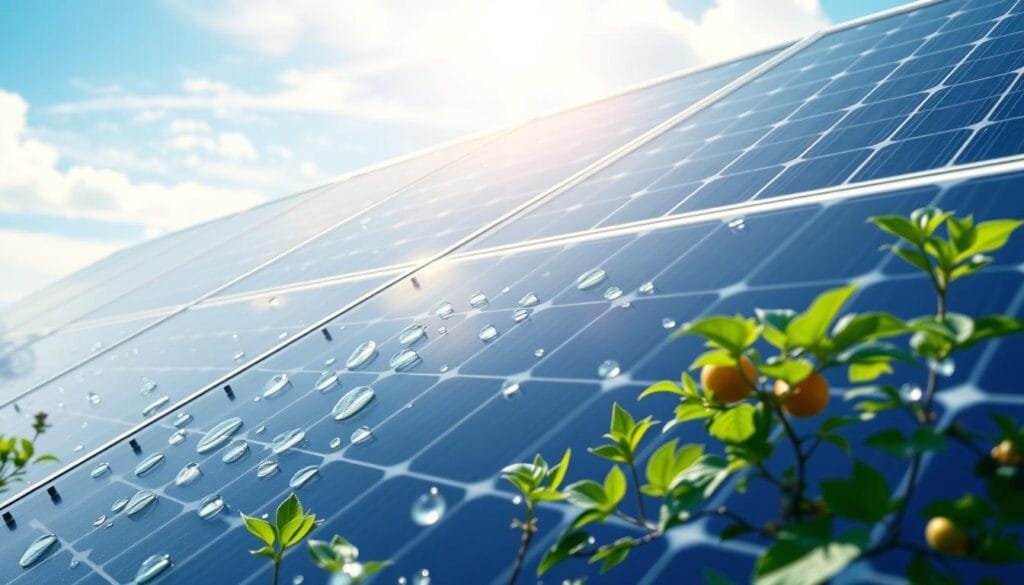
The hydrogel coating is key to this technology. It has water-absorbing hydrogel, durable cotton threads, and a protective Teflon layer. This mix helps the coating cool down and stay cool, keeping your panels in top shape.
2.2 Passive Thermal Management Through Evaporative Cooling
The coating uses passive thermal management with evaporative cooling. It absorbs water and slowly releases it, cooling the panels. This method is energy-saving and helps your panels work better.
Hydrogel solar cooling is a smart way to keep solar panels cool. It makes your panels more efficient and helps the environment too.
3. Tackling Solar Module Hotspots: The Core Problem
Hotspots in solar panels are a big issue. They make your system less efficient and can even damage it. These hotspots are warmer spots on the panel compared to the rest.
Why Hotspots Form on Your Solar Panels
Hotspots can be caused by many things. This includes defects in making the panel, shading, or damage. When part of the panel is shaded, it can get hotter than the rest.
The Impact of Elevated Temperatures on Photovoltaic Efficiency
High temperatures hurt your solar panels’ performance. They can make the material inside the panel break down. Studies say each degree above the usual test conditions can lower efficiency by up to 0.5%.
Traditional Cooling Methods and Their Limitations
Old ways to cool panels, like air or water, are used. But they have big downsides. They use a lot of energy and need a lot of upkeep.
| Cooling Method | Effectiveness | Energy Consumption |
|---|---|---|
| Air Cooling | Low to Moderate | Low |
| Water Cooling | Moderate to High | High |
| Hydrogel Coating | High | Low |
The table shows old cooling methods vary in how well they work and how much energy they use. The hydrogel coating is a better option, working well and using less energy.
4. PolyU Hydrogel Research: Methodology and Breakthrough Results
The PolyU hydrogel research has led to a groundbreaking innovation in solar panel technology. This breakthrough was achieved through a comprehensive study. It involved the development of a novel hydrogel coating.
4.1 The Research Team and Testing Parameters
The research team at PolyU combined hydroxyethyl cellulose with leafy cotton thread in the hydrogel matrix. This unique composition was tested under various conditions. It was to assess its effectiveness in reducing solar hotspots and improving photovoltaic (PV) efficiency.
4.2 Measuring the 16°C Temperature Reduction
The testing revealed a significant reduction in temperature. The hydrogel coating achieved a 16°C decrease in solar panel temperature. This was due to the coating’s ability to manage thermal energy through evaporative cooling.
4.3 Quantifying the 13% Energy Gain
The research also quantified the energy gain from the hydrogel coating. The results showed a 13% increase in energy production. This highlights the potential of this technology to enhance PV module energy gain.
4.3.1 Peak Performance Hours
During peak sunlight hours, the hydrogel coating maintained lower temperatures. This optimized energy output. As noted by the researchers,
“The hydrogel coating’s self-regulating mechanism ensures that the solar panels operate within an optimal temperature range, even during peak performance hours.”
4.3.2 Daily and Seasonal Variations
The study also examined the performance of the hydrogel coating under varying daily and seasonal conditions. The results indicated consistent improvements in energy production across different environmental conditions, as illustrated in
5. How the Hydrogel Coating Delivers Solar Hotspot Mitigation
The hydrogel coating is a new way to stop solar hotspots. It makes your solar panels work better. Solar hotspots are hot spots in solar cells that can harm their performance and life.
5.1 The Self-Regulating Cooling Mechanism
The hydrogel coating has a cooling system that works on its own. It uses evaporative cooling. Water in the hydrogel turns into steam, cooling the panels.
5.2 Water Absorption and Release Cycle
The coating soaks up water and then releases it. This keeps the panels cool. It’s key for the panels to work well.
5.3 Durability and Weather Resistance
The coating is tough and can handle different weather. It keeps your panels safe and working well for a long time.
5.3.1 Performance in UK Climate Conditions
In the UK’s weather, the coating works great. It keeps the panels cool, even with rain and changing temperatures.
- Effective reduction of solar spots
- Enhanced energy yield through improved cooling
- Durable and weather-resistant design
Using the hydrogel coating can make your solar panels more efficient and last longer.
6. Practical Benefits for Your Building-Integrated Photovoltaics System
Adding the innovative hydrogel coating to your BIPV system boosts its performance. This coating can recover almost half of the power lost due to hot spots. It’s a great addition to your solar energy setup.
6.1 Increased Energy Production for Your Property
The hydrogel coating cuts down solar hotspots by 16°C. This leads to a 13% increase in yield. Your property will get more from its solar energy system.
6.2 Extended PV Module Lifespan
The coating reduces hotspot effects, extending the lifespan of your PV modules. You’ll get more years from your BIPV system.
6.3 Reduced Degradation and Maintenance Costs
The hydrogel coating’s cooling effect boosts efficiency and cuts down heat degradation. This means lower maintenance costs for your BIPV system over time.
Using the hydrogel coating in your BIPV system brings many benefits. It boosts energy production and cuts down long-term costs.
7. Implementation and Future Prospects for UK Solar Installations
The use of hydrogel coating in UK solar installations is set to change the game. As we all want more renewable energy, new tech like hydrogel solar coating is key. It boosts solar panel efficiency and life span.
7.1 Retrofit Potential for Existing Systems
Hydrogel coating can be added to old solar panels, making them work better. This is great for older systems, as it’s cheaper than getting new ones.
7.2 Integration with New Solar Projects
For new solar setups, using hydrogel coating right from the start is best. It means your BIPV systems will work at their best from the beginning.
7.3 Anticipated Market Availability and Costs
The hydrogel tech team is gearing up for big tests and sales. At first, it might cost more, but prices should drop as it becomes more common.
7.3.1 Commercialisation Timeline
| Year | Milestone |
|---|---|
| 2024 | Large-scale testing begins |
| 2025 | Commercial rollout initiated |
| 2026 | Market availability expected |
The UK’s push for renewable energy will see hydrogel solar tech play a big part. It promises to up energy output and cut down on upkeep costs, making a big difference.
Enhancing Solar Energy Efficiency with Hydrogel Solar Cooling
Hydrogel solar cooling can change how your solar panels work by fixing solar hotspots. This new tech can cool panels by 16°C and boost energy by 13%. It’s a big deal for the solar energy world, especially for Building-Integrated Photovoltaics (BIPV) systems.
The hydrogel coating works by cooling itself down. It does this by soaking up and letting out water. This keeps the panels cool, leading to more energy, longer life, and lower upkeep costs.
This tech can cut down on power loss by 50 percent in BIPV systems. It’s set to make a big splash in the solar energy field. As things move forward, using hydrogel solar cooling in new and old solar projects will become more common. This will make solar energy more efficient and productive.