
Longi Achieves 27.25% Efficiency for Back-Contact Solar Cells Using High-Resistivity Wafers
Imagine a world where energy capture increases by nearly a third over standard equipment. You might be surprised to learn that standard photovoltaic panels usually struggle to pass the 20% mark in real-world conditions.
However, Longi recently shattered expectations by reaching a record 27.25% efficiency. This leap forward uses back-contact solar cells designed to maximize every photon hitting the surface of the module.
By utilizing high-resistivity solar cells, researchers have unlocked new levels of performance. They paired this with in-situ edge passivation to solve previous durability issues that hindered the technology.
These advanced silicon wafers once seemed too fragile for commercial use in the industry. Now, you can look forward to more productive energy modules that transform your electricity generation potential.
This innovation ensures your future green energy solutions are both robust and incredibly powerful. This marks a significant shift in how you harness the light of the sun for your daily needs.
Table of Contents
The Breakthrough in Photovoltaic Performance
Longi has made a big leap in solar cell efficiency, hitting 27.25% with high-resistivity wafers.
This is a huge step forward in photovoltaic performance. It makes solar panels more viable for everyone to use.
Setting a New Benchmark for Solar Cell Efficiency
Using high-resistivity silicon wafers shows great progress. These wafers were once tricky to work with because of edge recombination and mechanical damage.
Longi has found a way to beat these old problems. This has unlocked the full potential of these wafers.
This achievement sets a new standard in solar cell efficiency. It could change what we expect from photovoltaic devices.
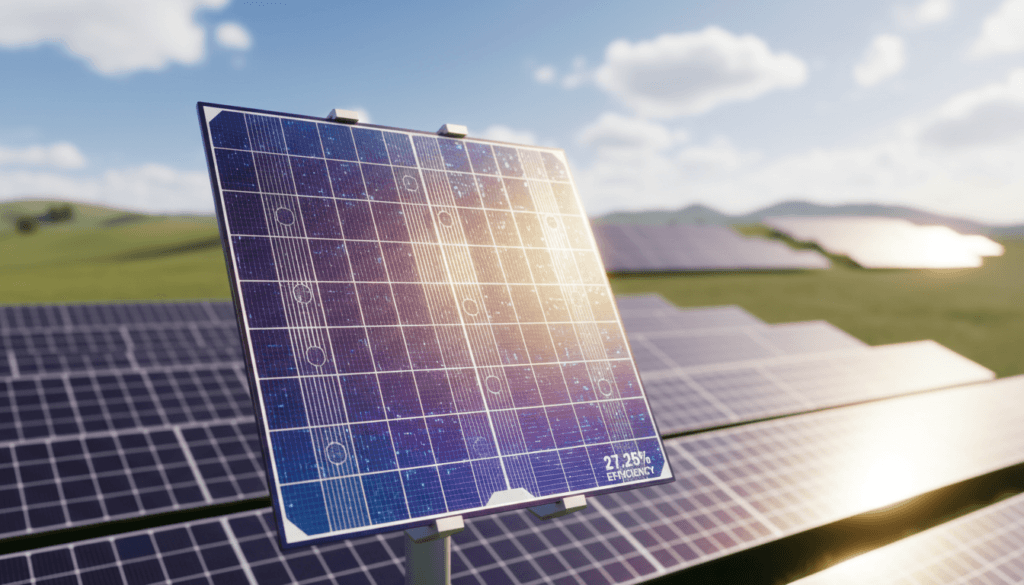
The Significance of the 27.25% Milestone
Reaching 27.25% efficiency is a big deal. It’s not just a technical win; it’s a game-changer for renewable energy.
This achievement means solar panels are now more efficient. They can compete better in the energy market.
As we look into renewable energy options, breakthroughs like this are key. They help us move away from nonrenewable sources.
Understanding High-Resistivity Solar Cells and Their Role
High-resistivity solar cells are a big step forward in solar technology. They use special materials, like silicon wafers, to work better. Knowing how these cells work helps us see why they make solar panels more efficient.
Why Electrical Conductivity Matters in Wafer Design
The electrical conductivity of silicon wafers is key to solar cell performance. High-resistivity wafers help by cutting down on energy loss. The wafer’s resistivity affects how well it turns sunlight into electricity.
The Physics of High-Resistivity Materials
High-resistivity materials control electrical current flow. This is good for solar cells because it helps manage energy. The science behind these materials is complex, involving how they interact with sunlight.
| Material Property | Impact on Solar Cell Efficiency | Benefit |
|---|---|---|
| High Resistivity | Reduces recombination losses | Improved efficiency |
| Electrical Conductivity | Enhances charge carrier mobility | Better energy conversion |
| Wafer Quality | Influences overall cell performance | Increased reliability |
Overcoming Traditional Limitations in Silicon Wafers
Old silicon wafers have limits in electrical conductivity and resistivity. But new methods like edge passivation have helped. Edge passivation cuts down on energy loss, making cells more efficient.
Enhancing Charge Carrier Lifetime
Charge carrier lifetime is crucial for solar cell efficiency. Improving this lifetime, through better silicon quality and passivation, is essential. Edge passivation, in particular, boosts fill factor, helping cells outperform standard ones.
Research shows edge passivation can greatly reduce energy loss. This breakthrough is a big step for solar cell tech, leading to more efficient panels.
Technical Innovations Behind the Longi Record
Longi has made a big leap in solar cell technology. They’ve broken the record for back-contact solar cells. Let’s dive into the tech that made this possible.
Advancements in Back-Contact Solar Cell Architecture
Longi’s solar cells are designed to be super efficient. The back-contact design gets rid of shading from front contacts. This lets more light in, boosting efficiency.
The cells have contacts on the back. This makes them look better and work better. It’s a clever design that increases energy output.
The Role of Edge Passivation in Reducing Energy Loss
Edge passivation is key to cutting down energy loss. Longi uses in-situ edge passivation to improve their cells. This method treats the edges to reduce electrical losses.
Refining Surface Recombination Velocities
Surface recombination velocities affect solar cell efficiency. Longi has worked on these velocities. This has helped reduce charge carrier loss, boosting performance.
Optimising the HIBC Solar Cell Structure
The HIBC solar cell structure is crucial for high efficiency. Longi has optimized this structure. It ensures the cell works at its best.
A recent study found that edge passivation is vital. It unlocks the potential of high-resistivity wafers. This boosts fill factor and efficiency.
“The integration of in-situ edge passivation has unlocked the potential of high-resistivity wafers, significantly boosting back-contact solar cell fill factor and efficiency.”
| Technological Advancement | Impact on Efficiency |
|---|---|
| Back-Contact Design | Increased surface area for light absorption |
| Edge Passivation | Reduced energy loss |
| HIBC Solar Cell Structure | Optimised performance |
Implications for the Renewable Energy Sector
Longi has set a new record in solar cell efficiency. This is a big deal for the renewable energy world. It shows a big change is coming, especially in places like the United Kingdom.
Scaling Production for the United Kingdom Market
The UK is aiming high with its renewable energy goals. With better solar panels, it can meet these targets. Making more panels will be key.
There are many good things about making more panels. These include:
- Lower costs because of making more
- More people using solar power at home and in businesses
- More secure energy supply with different sources
Future Prospects for Solar Panel Design and Efficiency
The future of solar panels looks bright. New tech like high-resistivity solar cells and edge passivation is coming.
“The integration of high-resistivity wafers and advanced passivation techniques will be pivotal in driving the next wave of efficiency improvements in solar cells.”
These new technologies will lead to even better solar panels. They will make more power from the same space.
| Technology | Energy Efficiency Gain | Production Cost Impact |
|---|---|---|
| High-Resistivity Solar Cells | Up to 27.25% | Initial increase, long-term decrease |
| Edge Passivation | Additional 1-2% | Moderate increase |
Longi’s breakthrough is a big step for renewable energy. It means solar panels will work better and might cost less. As we make more panels, especially in the UK, we’ll see these benefits more.
Conclusion
Longi has hit a big milestone with 27.25% efficiency in back-contact solar cells. This is thanks to new edge passivation and design. It’s a big step forward for renewable energy.
The industry will now focus on making these advancements bigger. This is to meet the need for more efficient and green energy. High-resistivity solar cells are key to making renewable energy more popular.
Longi is at the forefront, leading to better solar panels and efficiency. This will help make energy more sustainable in the UK and worldwide.