
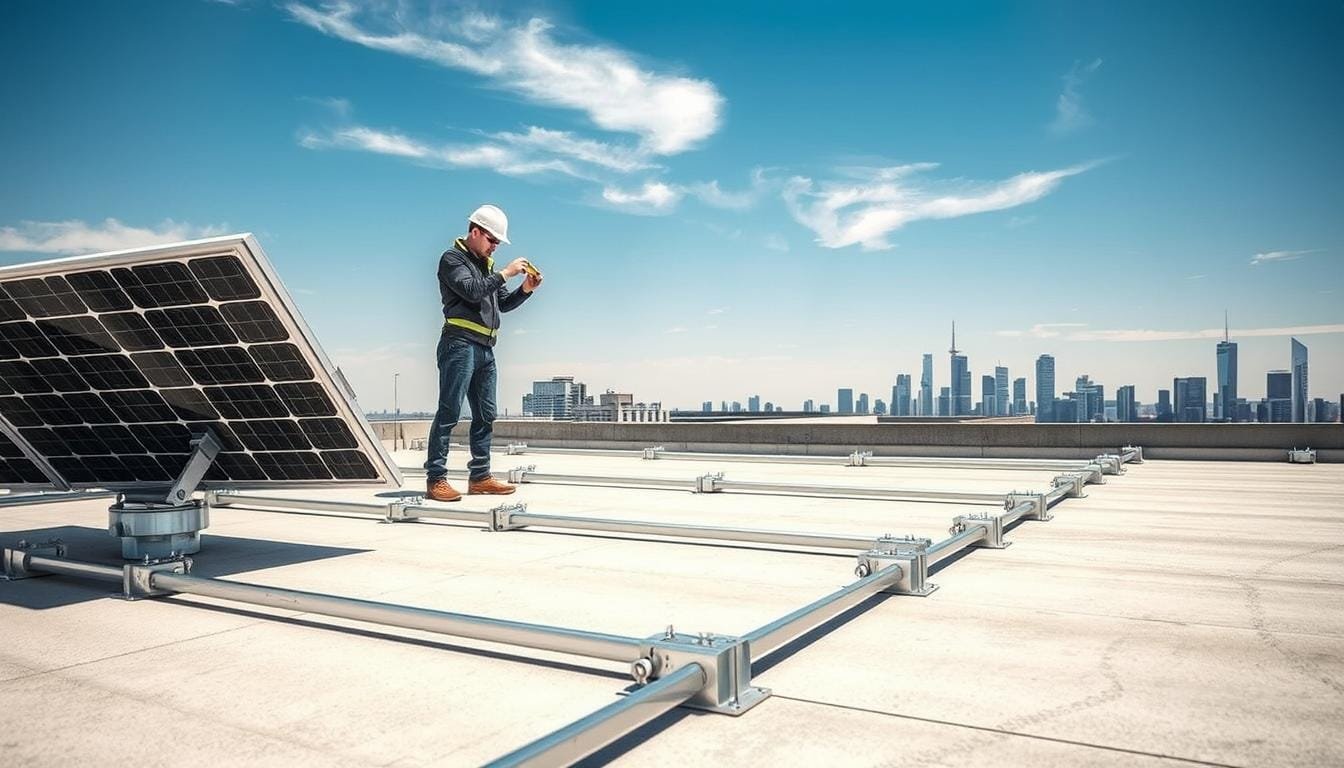
Mibet Unveils Non-Penetrating Z-Type Mounting for Concrete Flat Roofs
Ever thought about putting solar panels on a flat roof without drilling? Many worry about leaks when setting up a concrete roof pv structure. This fear often holds back the switch to green energy, as keeping the building safe is key.
Mibet has come up with a smart fix. Their non-penetrating concrete roof solar system mounts panels safely without holes. It uses a ballast design that keeps your roof safe and stable.
This mibet z-type tech is as good as top brands like Solaboac. Now, you can get great energy efficiency while reducing the risk of water damage. This makes your investment safe and effective for many years.
Table of Contents
1. Understanding the Non-Penetrating Z-Type Mounting System
Mibet’s Z-Type mounting system is a non-penetrating solution for concrete flat roofs. It ensures the roof stays intact and waterproof. This system provides a secure base for solar panels without harming the roof’s structure.
Other companies, like Solabo, also use non-penetrating technology. Solabo’s compact hooks clamp onto steel decks without drilling. This shows a move towards keeping roofs in good condition.
What Makes the Z-Type Design Unique
The Z-Type design is special because it can handle high wind loads well. It also allows for adjustable tilt settings. This makes it perfect for solar projects in windy areas.
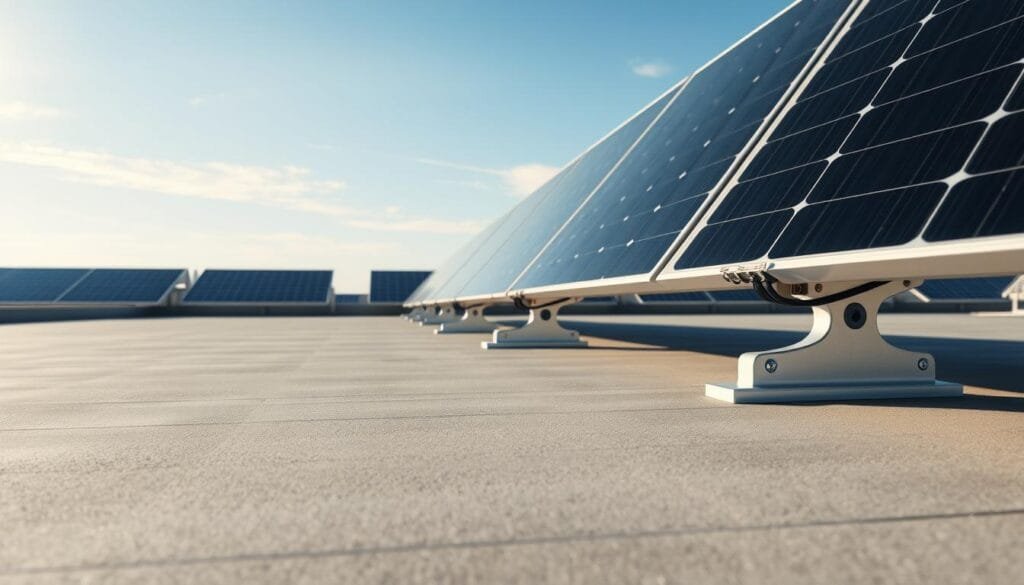
Non-Penetrating Technology Explained
The Z-Type system doesn’t need to drill into the roof. It uses weighted ballast trays to hold it in place. This keeps the roof solid and waterproof.
This tech keeps the roof safe and makes installing solar panels easier. It avoids the problems of traditional mounts that go through the roof.
Suitable Applications for Concrete Flat Roofs
The Z-Type system is great for concrete flat roofs. It’s perfect for commercial and industrial buildings. Keeping the roof waterproof is key here.
For solar installations on concrete flat roofs, the Z-Type system is a top choice. It fits different roof sizes and shapes well. This makes it a flexible option for many projects.
2. Key Benefits of Mibet Z-Type for Your Solar Installation
The Mibet Z-Type system is a top choice for solar installations on flat roofs. It’s designed to be secure, efficient, and adaptable. This non-penetrating mounting system meets your solar needs perfectly.
Preserving Roof Integrity and Waterproofing
The Mibet Z-Type system keeps your roof safe by avoiding any holes. This helps keep your roof waterproof and prevents leaks. It also means your roof will last longer without water damage.
High Wind Load Resistance Capabilities
This system is great at handling strong winds. Its design and ballast weight keep solar panels firmly in place. This gives you peace of mind and protects your investment.
Wind Load Resistance Comparison:
| Mounting System | Wind Load Resistance |
|---|---|
| Mibet Z-Type | Up to 200 km/h |
| Traditional Mounts | Up to 150 km/h |
Flexibility in Adjustable Tilt Configurations
The Mibet Z-Type system lets you adjust the tilt of your solar panels. This means you can get the most energy from the sun all year round. It’s a smart way to make sure your solar installation works well.

Cost and Time Efficiency Advantages
The Mibet Z-Type system is also cost and time efficient. It doesn’t need roof holes, which saves money on sealing and upkeep. Plus, it’s quicker to install, which cuts down on labour costs and gets your solar system up faster.
In summary, the Mibet Z-Type system is a great choice for solar installations on flat roofs. It solves many problems and is a smart investment for solar energy.
3. Comparing Non-Penetrating Solar Ballast Solutions
Choosing to put solar panels on a concrete flat roof means picking the right mounting system. Non-penetrating solar ballast solutions are popular because they hold solar panels in place without harming the roof.
Mibet Z-Type is a top choice for mounting solar panels on flat concrete roofs. It’s important to see how it stacks up against other systems.
Mibet Z-Type vs Traditional Penetrating Mounts
Traditional mounts drill into the roof to hold the system in place. This can damage the roof and cause leaks. On the other hand, the Mibet Z-Type uses ballast trays to hold solar panels, keeping the roof intact and waterproof.
This method avoids roof damage and makes installation easier. It also keeps the roof watertight, reducing future maintenance needs.
Matrix-Style PV Installation Advantages
A matrix-style PV installation puts solar panels in a grid to boost energy output. The Mibet Z-Type system fits well with this setup, offering flexibility and adjustability for panel angles.
This design boosts energy production and looks neat. It also makes maintenance and cleaning of panels easier.
When to Choose Flat Roof Z Bracket Mounting Solutions
Flat roof Z bracket solutions, like the Mibet Z-Type, are perfect for roofs where you can’t drill. They’re great for concrete flat roofs, offering a secure way to mount solar panels.
Go for a non-penetrating Z bracket if you want to keep the roof intact or if the roof can’t handle much weight. These systems are flexible and work well for many solar projects.
4. Preparing Your Concrete Flat Roof for Installation
Getting your concrete flat roof ready for the Mibet Z-Type solar mounting system is crucial. It involves several important steps. These steps help your roof handle the weight and stress of the solar panels and mounting system, especially in windy areas.
Assessing Roof Load Capacity and Structural Requirements
First, check if your roof can take the extra weight. Look at the condition of your concrete flat roof. It must support the solar panels, the Mibet Z-Type mounting system, and any wind loads. If unsure, talk to a structural engineer.
Key factors to consider include:
- The age and condition of your roof
- The type of concrete used and its current state
- Any existing damage or deterioration
- The design and weight of the solar panel system
Required Tools and Materials Checklist
Having all the tools and materials ready makes the installation easier. For the Mibet Z-Type system, you’ll need:
- Mibet Z-Type mounting brackets and rails
- Non-penetrating solar ballast trays
- Solar panels
- Standard toolkit including wrenches, drills, and safety gear
Make sure all parts fit your concrete roof PV structure well.
Safety Considerations and Precautions
Safety is the most important thing during installation. Wear the right safety gear, like harnesses and non-slip shoes. Also, remember to:
- Do a detailed risk assessment before starting
- Make sure your team knows how to install solar systems on concrete roofs
- Follow all safety rules and laws
Weather Conditions for Optimal Installation
The weather affects the installation. Try to do it when it’s calm and dry. This ensures the work is safe and done well. Don’t install in high winds or when it’s wet, as it can damage the system.
By preparing your roof well and following these tips, you can install your Mibet Z-Type system successfully. This will help you get the most out of your solar investment.
5. Step-by-Step Installation Guide for the Z-Type System
The Mibet Z-Type mounting system is a non-penetrating solution for concrete flat roofs. It makes installation easy. This guide will help you install the Z-Type system. You’ll get a secure and efficient solar mounting solution.
Step 1: Layout Planning and Marking Your Concrete Roof PV Structure
First, plan your solar panel array’s layout. Calculate the best panel spacing and mark roof reference points.
Calculating Panel Spacing
Think about your solar panel size, tilt angle, and shading when spacing panels. Right spacing boosts energy production and maintenance ease.
Marking Reference Points
Mark your solar panel array’s reference points with chalk or a laser level. These marks help place the solar ballast trays and Z-Type brackets.
Step 2: Positioning the Non-Penetrating Solar Ballast Trays
The non-penetrating solar ballast trays are key. They secure solar panels without roof damage.
Distributing Weight Evenly
Spread the ballast trays’ weight evenly to avoid roof stress. This keeps your roof strong.
Ensuring Level Placement
Use a spirit level to check the ballast trays’ level. A stable base is vital for the Z-Type brackets and panels.
Step 3: Installing Z-Type Brackets and Rails
With the ballast trays set, install the Z-Type brackets and rails. These parts form your solar panel array’s structure.
Securing Brackets to Ballast Base
Attach the Z-Type brackets to the ballast trays as the maker says. Make sure all connections are strong against weather.
Attaching Mounting Rails
Secure the mounting rails to the Z-Type brackets next. These rails hold the solar panels and allow tilt adjustments.
| Component | Function | Installation Tip |
|---|---|---|
| Non-Penetrating Solar Ballast Trays | Provides weight to secure the solar panels | Ensure even distribution of weight |
| Z-Type Brackets | Forms the structural framework for the solar panel array | Securely attach to ballast trays |
| Mounting Rails | Supports the solar panels and allows for tilt adjustments | Attach to Z-Type brackets securely |
Step 4: Adjusting Tilt Angles for Optimal Performance
Adjusting your solar panels’ tilt is key for best energy output. The Z-Type system lets you adjust tilt to fit your needs.
Determining Ideal Tilt for Your Location
Think about your location’s latitude, climate, and seasons when setting tilt. Check local solar installation guides for tips.
Locking Adjustable Components
After setting the best tilt, lock the parts in place. This keeps your solar panels steady.
Step 5: Mounting Solar Panels to the System
Now, mount your solar panels to the Z-Type system. The structure is ready.
Panel Attachment Methods
Follow the maker’s guide to attach panels to the rails. Make sure panels are tight against wind and weather.
Grounding and Electrical Connections
Grounding and electrical connections are crucial for safe solar panel use. Get a qualified electrician to check local codes.
Step 6: Final Inspection and Quality Checks
After installing, do a final check. Make sure everything is secure and working right.
Verifying Stability and Load Distribution
Check the system’s stability and weight distribution on the ballast trays.
Checking All Fasteners and Connections
Make sure all fasteners and connections are tight. This includes the Z-Type brackets, rails, and panels.
6. Optimising Performance and Maintenance of Your Installation
To get the most out of your Mibet Z-Type mounting system, pay close attention and check it regularly. A good maintenance plan is key to keeping your solar setup running smoothly.
Regular maintenance boosts performance and extends the life of your system. It includes inspections, tweaks, and solving problems quickly.
Regular Inspection Schedule for High Wind Load Areas
In places with high wind loads, you need to check your system more often. It’s best to do this at least twice a year or after bad weather.
Look for wear or damage on the Z-Type parts during these checks. Make sure all connections are tight and the system hasn’t moved due to wind or weather.
Managing Ballast Weight Distribution Over Time
Keeping the ballast weight distribution right is vital for your system’s stability. Weather and roof settling can change how weight is spread over time.
Check the ballast trays often to keep the weight even. You might need to adjust them to stop the panels from tilting or moving.
Troubleshooting Common Issues with Non-Penetrating Mounts
Even tough non-penetrating mounts can have problems. Issues like water under the ballast trays or the system moving are common.
To fix these, first find out why it’s happening. For water, make sure the roof drains well and adjust the trays if needed. For movement, check the ballast weight and spread, and adjust as needed.
By sticking to these maintenance and fixing tips, your Mibet Z-Type system will keep working well. It will provide reliable solar energy for many years.
7. Conclusion
The Mibet Z-Type non-penetrating mounting system is a strong choice for solar setups on flat concrete roofs. It keeps the roof safe and strong, even in windy conditions. This makes it a solid and dependable option for solar panels on concrete roofs.
As shown in the sources, Mibet’s Z-Type system is changing the solar industry for the better. It’s easy to adjust and cost-effective, perfect for boosting your solar energy use.
Thinking about putting solar panels on your concrete roof? The Mibet Z-Type system is worth considering. It’s easy to set up and needs little upkeep, giving you a smooth solar energy journey.
Choosing the Mibet Z-Type system means you’re picking a durable and efficient way to mount your solar panels. It’s built to last, ensuring your solar setup works well for years to come.